

 +91 98112 27269
Often, hearing aids that appear to be helping less than before have easily addressable issues such as earwax, an old dome needing replacement, a clogged filter, or a battery on its way out, and all four are fixable in a single visit.
On other occasions, it is quite likely that a component (hardware) in the hearing aid is not working optimally. This would likely be the microphone, the receiver (speaker), or the battery. Over a period of time, these components become weaker and require replacement at the service centre.
The rest of the time, it’s your own hearing that has shifted since the last fitting, which calls for reprogramming of your existing devices or a new purchase.
What follows is how to tell which one you’re dealing with, and what to do next.
Key Takeaways
- Most hearing aids that feel weaker haven’t failed; earwax, a worn dome, a clogged filter, or a tired battery account for the bulk of the complaints audiologists see.
- A well-maintained hearing aid is typically good for 4 to 5 years.
- Your hearing itself can shift gradually, which makes a properly working device feel less effective even though nothing is wrong with it.
- A cleaning or reprogramming session resolves most performance complaints in a single visit, without needing a new device.
- Persistent whistling, muffled sound after a professional clean, a battery that won’t hold charge, or a hearing test that’s changed since your last fitting are the real signs it’s time to come in.
Why Does a Hearing Aid Start to Feel Weaker Over Time?
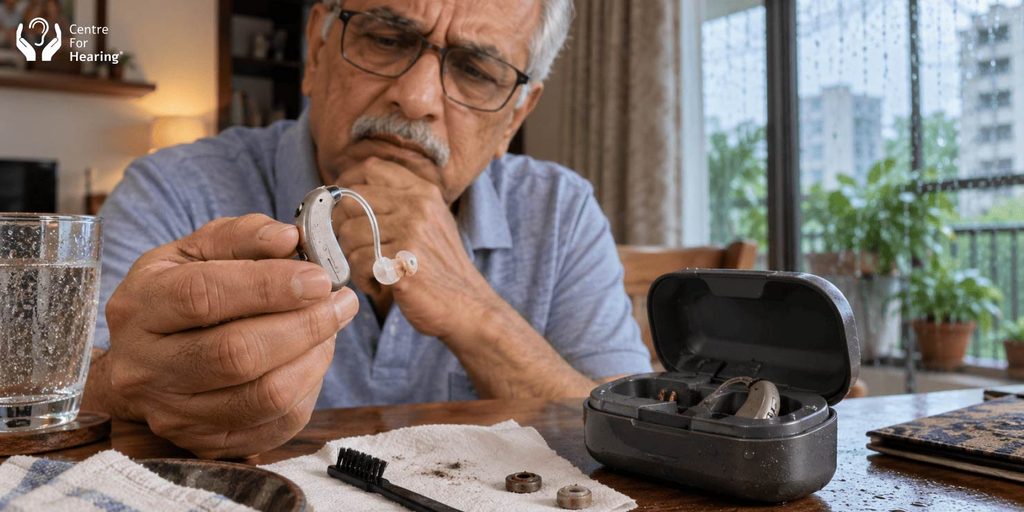
Most day-to-day performance complaints trace back to a short list of causes, and most of them are quick fixes. Earwax and moisture are the biggest offenders in India’s climate, particularly through Delhi and Punjab’s humid summers and the monsoon months, since sweat and wax both work their way into the microphone and receiver ports of the ear machine. Worn domes, clogged wax filters, and corroded battery contacts follow close behind. But genuine component wear catches up eventually too.
A hearing aid machine is worn 8-14 hours a day, unlike a phone that spends most of its time in a pocket or a laptop that stays indoors. The constant exposure to heat, humidity, dust, and daily handling means the microphone, receiver, or battery will typically need replacing within 2-4 years, often right after the standard warranty runs out.
That’s the real argument for checking whether your warranty can be extended before it lapses, not waiting until a part fails to find out it’s no longer covered. Centre for Hearing®’s CareFree package, for instance, extends battery and servicing cover up to 5 years.
| What You’re Noticing | Likely Cause | What Usually Fixes It |
| Muffled or distant sound | Earwax or moisture blocking the receiver | Cleaning the ports and wax filter |
| Feedback or whistling | A loose dome, poor fit, or blockage | Refitting the dome or clearing the wax |
| Shorter battery life | An ageing rechargeable battery, usually after three to four years | Battery unit replacement |
| Sound that feels flat or thin | Worn tubing or a damaged receiver wire | Replacing the consumable part |
| Inconsistent volume through the day | Moisture inside the casing | Drying overnight and a professional check |
| Everything sounds quieter, even after cleaning | Your hearing has changed since the last fitting | A fresh hearing test and reprogramming |
If the whistling shows up often, our notes on why hearing aids whistle walk through the fit and blockage issues behind it in more detail. Earwax buildup deserves its own mention too.
It’s one of the most common and most overlooked causes of a hearing aid that suddenly sounds worse than it did a month ago. For the day-to-day basics, our guide to cleaning hearing aids properly covers the routine that prevents most of this before it starts.
How Long Should a Hearing Aid Last?

A well-maintained device typically performs reliably for 4 to 5 years. In-ear styles that sit inside the moist part of the canal tend to wear out sooner than behind-the-ear designs, because they sit closer to wax and sweat all day. Once you’re closing in on that four-to-five-year mark, it’s worth asking about Centre for Hearing®’s buyback offer on your existing hearing aid rather than waiting for performance to drop off first. Upgrading on your own schedule, with credit for the old unit, usually beats a forced replacement later.
Rechargeable batteries run on their own separate clock. The battery, not the rest of the device, is usually the first part to weaken, generally around the three to four year mark. If your hearing aid machine doesn’t hold a charge through the day the way it once did, that’s frequently the battery ageing rather than the whole unit failing. We’ve gone into more depth on how long rechargeable hearing aid batteries typically last, including how streaming and charging habits affect the timeline.
None of this means you’re stuck waiting out a slow decline. Regular servicing, which most audiologists recommend every six months, keeps a device performing closer to its original level for longer.
What Should You Check Before Assuming It’s Broken?

- Clean the wax filter and dome. A blocked filter is the single most common reason for sudden muffled sound, and most users can swap one in under a minute once shown how.
- Check the battery contacts or the charging case. Corrosion on the contacts or a dusty dock can mimic a failing hearing aid convincingly.
- Let the device dry out overnight. Humidity and monsoon-season moisture affect performance more than most people expect, especially for a unit worn all day.
- Check the volume setting or programme. A control nudged out of place by accident can make a perfectly good device sound off.
- Rule out your own hearing before blaming the device. If the problem shows up in both ears and across different settings, book a hearing test rather than assume the fault lies with the hardware. Centre for Hearing®’s free online hearing test takes about three minutes.
When Should You See an Audiologist Instead of Troubleshooting at Home?
Home fixes, cleaning out the wax, swapping the wax filter, and putting the device on charge to confirm the light is blinking properly, solve a fair share of complaints. But not every one. Book an appointment rather than keep guessing if any of these apply:
- The problem persists after cleaning and a fresh battery.
- Sound stays muffled right after a professional clean.
- Family members mention you’re missing more of the conversation than usual, often before you notice it yourself.
- It’s been over a year since your last hearing test.
At Centre for Hearing®, this is one of the more common cases audiologists handle: not a broken device, but a hearing profile that has shifted since the last fitting and needs reprogramming to match it. Online screening tests are a reasonable first step, but they can’t replace an in-person assessment, particularly for catching the kind of gradual change that makes a perfectly good hearing aid feel underpowered.
If cleaning and reprogramming still don’t bring performance back to where it should be, the honest answer is sometimes that repair no longer makes sense compared with replacement, especially once a device is past the five-year mark. We’ve laid out how to weigh repair against replacement, including what each option tends to cost, in a separate piece.
A hearing aid that feels weaker almost always has an explainable, fixable cause behind it. Centre for Hearing® has been building hearing solutions for Indian patients since 1973, and the fastest way to find out what’s going on with yours is to have it checked rather than assume the worst.
Book a Free Consultation with an audiologist at your nearest clinic, or Book a Hearing Aid Demo if it’s time to consider an upgrade.
Call Us Now at +91 9811 227 269.
Frequently Asked Questions
1. How often servicing hearing aids is recommended?
Every six months for a general check, even when nothing seems wrong. Ask your audiologist about the manufacturer service schedule that applies to your specific warranty.
2. Does the Centre for Hearing®’s CareFree package cover hearing aids that’s lost effectiveness?
The CareFree package covers batteries and servicing for up to five years, so most of the fixes mentioned above, worn parts and battery swaps, fall within it for enrolled customers.
3. Can Centre for Hearing® reprogram hearing aids instead of replacing it?
Yes. If a hearing test shows your hearing has changed, audiologists at Centre for Hearing® can usually reprogram the existing device to match it, without a new purchase.
4. Is home visit service available for hearing aid checks?
Yes. Centre for Hearing® offers a home visit facility for hearing aid checks and servicing, useful for senior citizens or anyone who finds travelling difficult.
5. How do I know if it’s time for a repair or a full replacement of hearing aids?
It comes down to the device’s age, how often it has needed fixing recently, whether the fault is a minor consumable part or genuine internal wear, and what’s left on the manufacturer’s warranty. A short assessment at Centre for Hearing® usually settles the question within one visit.