

 +91 98112 27269
Most hearing aids last four to five years, but “still working” doesn’t mean “still right for your hearing.” If your hearing aid, or ear machine as it’s commonly called in India, needs frequent repairs, sounds muffled even after a professional clean, or your hearing has changed since your last fitting, replacement usually makes more sense than another repair.
At Centre for Hearing®, this is one of the most common questions in our audiologists field: is the current device still doing its job, or has it quietly stopped keeping up? Here’s how to tell the difference, what it costs to fix versus replace, and how the 2026 pricing breaks down.
Key Takeaways
- Most hearing aids last four to six years, but “still working” doesn’t mean “still right for your hearing.”
- Frequent repairs, muffled sound after servicing, or a change in your hearing are the clearest signs it’s time to replace rather than repair.
- Untreated or under-amplified hearing loss carries a real cognitive risk, not just an inconvenience.
- Centre for Hearing®’s 2026 price list for a new hearing aid or ear machine ranges from ₹12,000 for entry-level devices to ₹4,50,000 for premium AI-enabled models, per ear.
- A buy-back scheme (up to ₹30,000 off) and EMI options can help offset the cost of upgrading.
How Long Do Hearing Aids or Ear Machines Actually Last?
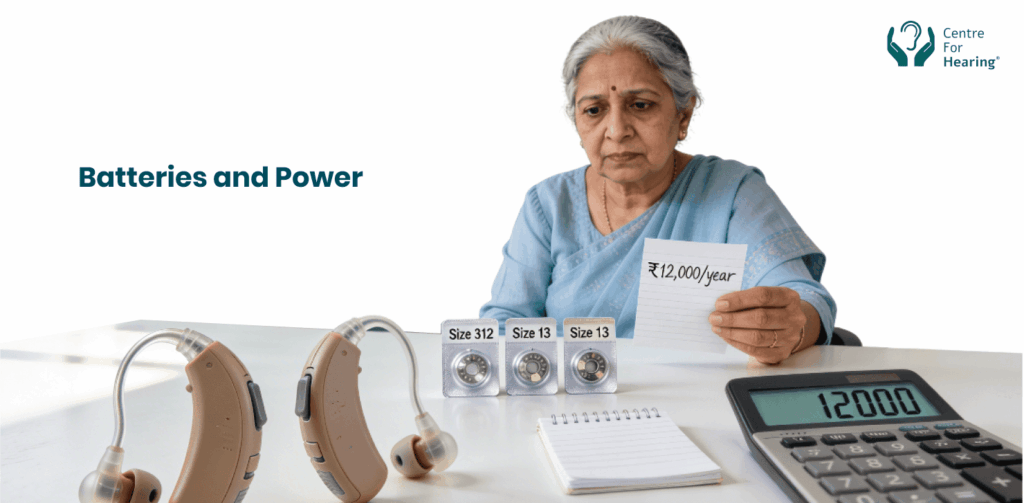
Most hearing aids are built to perform well for four to five years, with well-maintained, higher-end models sometimes reaching seven. Lifespan depends on build quality, how consistently the device is cleaned and serviced, and how much daily wear and tear it takes on: heat, humidity, sweat, and earwax all play a part.
That said, “still working” and “still the right fit for you” are two different things.
A device can function perfectly and still be the wrong choice for your hearing three or four years after you bought it, simply because your hearing, or the technology available, has moved on.
What Signs Mean It’s Time to Replace Your Hearing Aids?
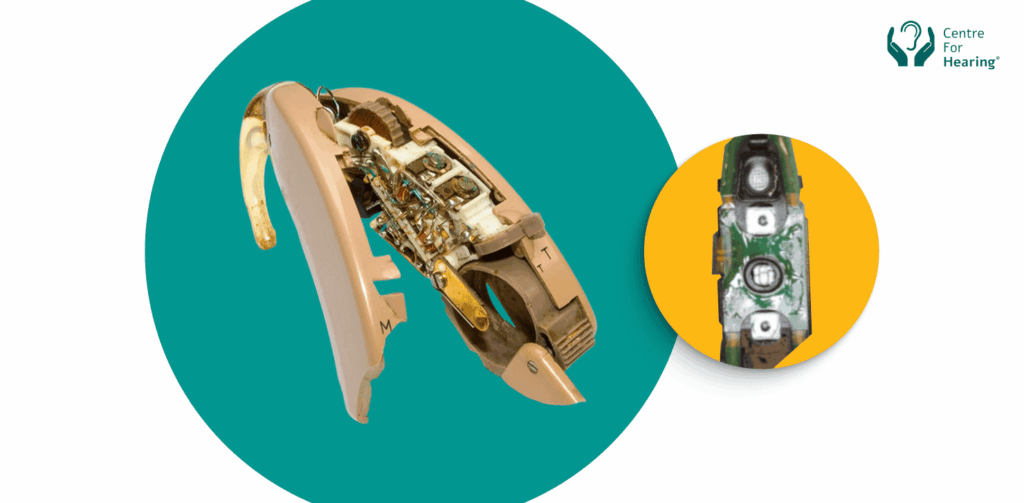
A few patterns are worth paying attention to:
- Repairs are becoming frequent, or the cost of fixing the device is creeping close to the cost of a new one.
- Sound feels muffled, distorted, or inconsistent even after a professional clean and adjustment.
- You’ve noticed a real change in your hearing since your last fitting, whether that’s struggling more in noisy rooms or turning the volume up out of habit.
- The device shows visible wear: cracked casing, a worn battery door, a receiver that won’t seat properly.
- You’re missing conveniences that have become standard in newer ear machines, like Bluetooth streaming or rechargeable batteries, and it’s affecting how much you use the device day to day.
If your hearing has changed, a hearing test is the place to start, not a new device purchase. Take a 3-minute online hearing test now.
Sometimes your current hearing aids can simply be reprogrammed to match your updated hearing profile. An audiologist can tell you which situation you’re in.
Why Does Putting This Decision Off Cost More Than Money?

This part often gets left out of similar articles, but it’s worth sitting with. Hearing loss in India isn’t a small problem. The World Health Organization estimates that around 63 million people in the country live with significant hearing impairment, a prevalence of roughly 6.3%. Yet a 2026 Indian cost-effectiveness study found that only about 5% of older adults with hearing difficulty actually use a hearing aid, even though the same study found meaningfully higher quality-of-life scores among those who did.
There’s a cognitive angle too. A 2025 Indian cohort study linked hearing loss to a substantially higher risk of cognitive impairment in older adults. And in the ACHIEVE trial, a large US randomised study published in The Lancet, older adults who were already at higher risk of cognitive decline saw that decline slow by 48% over three years when fitted with working hearing aids, compared with a control group. The effect wasn’t uniform across every participant, but for the higher-risk group, it was substantial.
The practical takeaway: hearing aids that no longer amplify correctly for your current hearing loss don’t just sound worse. They stop doing the job that made the original investment worthwhile in the first place.

How Has Hearing Aid Technology Changed?
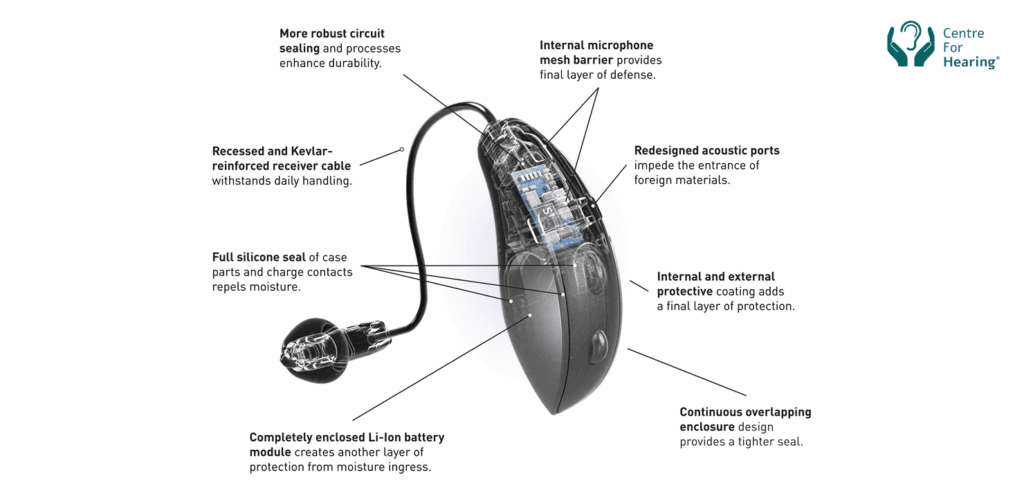
If your hearing aids are more than four or five years old, the gap between what they can do and what current models offer is probably larger than you’d expect. Manufacturers have moved quickly on a few fronts: AI-assisted sound processing that adapts to noisy environments in real time, rechargeable batteries that remove the daily fuss of changing batteries, and Bluetooth connectivity that streams calls and audio directly into the device. Brands like Phonak, Signia, Widex, ReSound, Oticon, and Starkey have all released newer platforms built around these features. Oticon’s BrainHearing approach, for instance, is built specifically around how the brain processes sound rather than just amplifying it louder.
None of this means older devices are obsolete. It means the comparison is worth making before you assume your current pair is still your best option.
Wondering how your current pair stacks up against this year’s models?
Book a free consultation with a Centre for Hearing® audiologist to compare features side by side.

Should You Repair, Replace, or Upgrade Your Hearing Aid?
If your hearing aid is under two years old, the fault isn’t physical damage, and it’s still within warranty, repair is usually the sensible call. We’ve covered that decision in detail in our guide on hearing aid repair in India. This article is about the other side of that decision: devices that are working but are past their useful life, or that no longer match your hearing needs. If you’re not sure which category you’re in, a hearing assessment will settle it faster than guessing.
What Does a New Ear Machine Cost in 2026, and How Can You Offset It?
Pricing depends on the technology tier you choose. Here’s how Centre for Hearing®’s 2026 price list breaks down, per ear:
| Category | Key features | Price range (₹) |
| Entry-Level | Battery operated | 12,000–20,000 |
| Basic | Digital, battery operated | 21,000–40,000 |
| Essential | Rechargeable, Bluetooth | 45,000–80,000 |
| Mid-Level / Standard | Rechargeable, Bluetooth, noise cancellation, motion sensors | 85,000–1,50,000 |
| Advanced | AI-enabled, rechargeable, Bluetooth, noise cancellation, motion sensors | 1,50,000–2,50,000 |
| Premium | AI-enabled, rechargeable, Bluetooth, noise cancellation | 2,75,000–4,50,000 |
All prices are per ear and indicative. Confirm current figures with your nearest Centre for Hearing® For clinic before purchase. Find your nearest clinic here.
Warranty coverage runs from one to four years depending on the model. A few things can bring the real cost down: Centre for Hearing® runs a buy-back scheme on old hearing aids, offering up to ₹30,000 off a new pair, and EMI options are available if you’d rather spread the cost. The CareFree package, which covers batteries and servicing for up to five years, is also worth asking about if ongoing maintenance is a bigger concern for you than the upfront price.
Centre for Hearing® has been fitting hearing aids since 1973, working with more than 3,00,000 customers through a network of experienced M.Sc. Audiologists across Delhi NCR, Gurugram, Chandigarh, Ludhiana, Jalandhar, and Patiala. Every purchase includes a Hearing aid demo, and free home visits are available if you’d rather not travel to a clinic.

Ready to find out where you stand?
The only way to know whether your current hearing aids are still doing their job is to have them, and your hearing, properly assessed. Book a Free Consultation with an audiologist at your nearest Centre for Hearing® clinic, or call 📞 +91 9811 227 269 to speak with someone directly. Watch Why Centre for Hearing to see what that looks like in practice.

Frequently asked questions
1. How often should hearing aids be replaced?
Most people replace their hearing aids every four to six years, though this varies with device quality, care, and how much your hearing has changed in that time.
2. Can my current ear machine just be reprogrammed instead of replaced?
Often, yes. If your hearing loss has changed but the device itself is in good condition, an audiologist can usually reprogram it to your new hearing profile rather than fitting a new one.
3. Does Centre for Hearing® offer a trade-in option on old hearing aids?
Yes. There’s a buy-back scheme that offers up to ₹30,000 off a new pair when you exchange an old device.
4. Will I need a new fitting process if I upgrade my ear machine?
Yes, a new hearing aid requires its own assessment and fitting, even if you’re staying with the same brand. Your ear shape, hearing profile, and lifestyle needs are reassessed each time.
5. Is it worth upgrading if my current hearing aids still work fine?
It depends on whether they still match your current hearing loss and lifestyle. A working device that’s several years old may still be under-amplifying for your ears or missing features that would meaningfully improve your day-to-day hearing.
However, there is always better and new technology for patients to try and upgrade to. It is worth exploring newer technology for better sound quality, better speech in noise, and AI features.
6. How much does it cost to replace an old ear machine?
Centre for Hearing offers buyback schemes for old hearing aids – both for their old clients as well as for patents who purchased earlier from another vendor. The buyback offer depends on the condition of your old hearing aids, age of the instruments, and which new model you are going for.
Purchasing a new instrument depends on the technology tier, from ₹12,000 for an entry-level device up to ₹4,50,000 for a premium AI-enabled model, per ear. The pricing table above breaks down what each tier includes.