

 +91 98112 27269
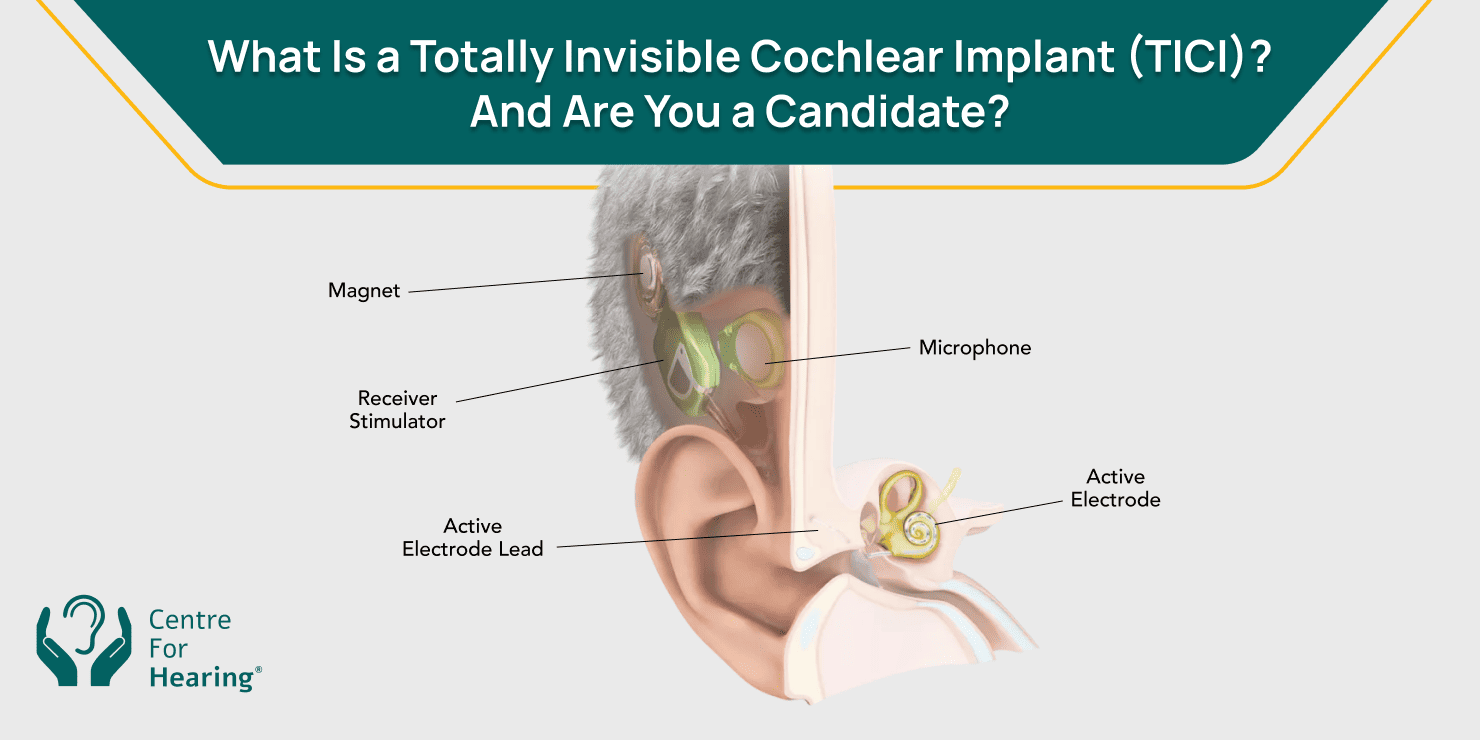
Some patients decide against a cochlear implant not because of the surgery, but because of what comes after it: a processor clipped behind the ear, visible from across a room. That specific objection drove two decades of research toward one goal, a cochlear implant with nothing to see at all. In September 2026, the Austrian company MED-EL got there first, with a device that has no external hardware at all.
If a cochlear implant has come up for you, or for someone you are caring for, this changes what “no” used to mean. This piece covers what a totally invisible cochlear implant does differently from the implants fitted today. It also covers who qualifies, whether or not the fully invisible version itself reaches Indian clinics soon.
Key Takeaways
- MED-EL launched TICI UNICO on 29 September 2026, the first commercially available cochlear implant with every component, including the microphone, implanted beneath the skin.
- TICI UNICO currently holds CE Mark approval for the European market. Its availability in India has not been confirmed as of this writing.
- In the United States, Envoy Medical’s Acclaim implant completed enrolment of its 56-patient FDA pivotal trial in March 2026, with a regulatory submission targeted for 2027.
- Candidacy for any cochlear implant, visible or invisible, rests on the same core criteria: severe-to-profound sensorineural hearing loss and limited benefit from hearing aids.
- Centre for Hearing® offers cochlear implant evaluation and candidacy assessment at its Delhi NCR, Gurugram, and Chandigarh clinics, ahead of whichever implant technology eventually gets recommended.
- TICI UNICO’s current approval covers adults only. Paediatric candidates remain on conventional cochlear implants, where decades of outcome data already exist.
What Does “Totally Invisible” Mean for a Cochlear Implant?
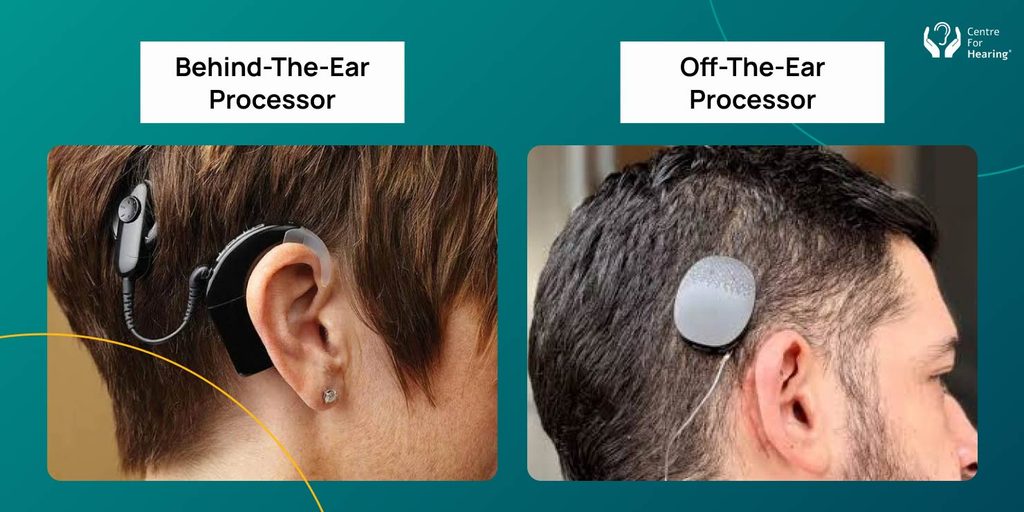
A conventional cochlear implant has two parts. An internal electrode array sits inside the cochlea, placed there during surgery. An external sound processor, worn behind or near the ear, picks up sound, converts it to a signal, and sends it through the skin to the internal part. That external piece comes off for sleeping, showering, and swimming, and it is the part people see. It is the same cosmetic concern that pushes many hearing aid users toward invisible-in-the-canal or in-the-canal styles. A cochlear implant candidate’s hearing loss, though, is usually too severe for a hearing aid to help.
A totally implantable cochlear implant, or TICI, removes that external piece completely. Every component, the microphone included, sits beneath the skin. Capturing sound through skin and tissue has been the hardest technical problem in this field. That is why no company had solved it commercially until now.
MED-EL’s TICI UNICO changed that on 29 September 2026, launching in Europe with CE Mark approval as the first cochlear implant with all parts, including the microphone, placed under the skin. The battery is implanted too, recharged through the skin with an external charger worn for about an hour a day. How long that battery, and the implant overall, will hold up over 10, 20 or more years is still an open question researchers are tracking.
TICI UNICO’s current approval covers adults only. For children, conventional cochlear implants remain the standard, with decades of outcome data behind them.
How Is a TICI Different From the Cochlear Implants Used Today?
| Criteria | Conventional Cochlear Implant | Totally Invisible Cochlear Implant (TICI) |
|---|---|---|
| External hardware | Sound processor worn behind or near the ear | None |
| Removed for swimming or sleep | Yes, the external processor comes off | No, hearing continues around the clock |
| Who makes them | Cochlear, MED-EL, Advanced Bionics | MED-EL (TICI UNICO, Europe); Envoy Medical (Acclaim, US trial stage) |
| Available in India | Yes, through established CI programmes | Not yet confirmed |
| Battery | Worn externally, swapped or recharged daily | Implanted; charged through the skin with an external charger |
MED-EL is not the only company racing toward this. Envoy Medical’s Acclaim implant takes a different technical route, using a sensor that reads vibration from the middle ear rather than an implanted microphone. The company completed enrolment of all 56 participants in its US pivotal trial in March 2026, and is now working through follow-up data collection ahead of an FDA submission. Both approaches point in the same direction. A fully implanted cochlear implant is no longer a lab concept. It is a live, competitive category.
Is a Totally Invisible Cochlear Implant Available in India?
Not yet, and it would be misleading to say otherwise. TICI UNICO’s CE Mark covers European sale; nothing in MED-EL’s launch material addresses an India timeline. Envoy Medical’s Acclaim remains an investigational device even in its home market. Anyone telling you a TICI can be fitted in India today is ahead of the facts.
What Centre for Hearing® can do right now doesn’t depend on any single implant brand. A full audiological evaluation confirms whether a cochlear implant, in any form, is the right next step for you or your child. That assessment, done alongside coordinating ENT specialists, is what decides candidacy long before a specific device enters the conversation.
Book a FREE Consultation to get that assessment started, or call us now at +91 9811 227 269.
Who Is a Candidate for a Cochlear Implant?
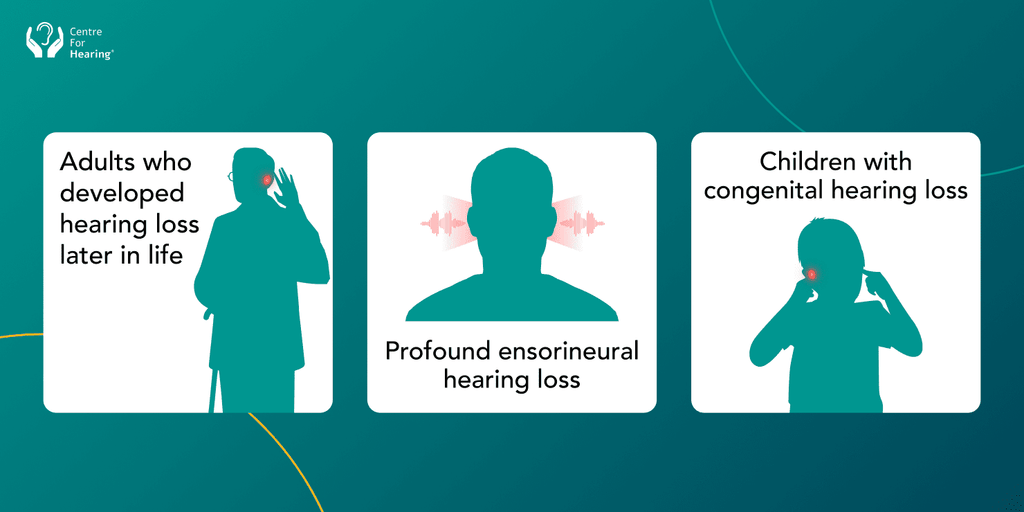
Candidacy does not change based on which implant eventually gets chosen. The baseline criteria, used across conventional cochlear implants today and likely to apply to any TICI that eventually reaches India, include:
- Severe-to-profound sensorineural hearing loss in one or both ears.
- Limited or no meaningful benefit from hearing aids after a proper trial period.
- Children with congenital hearing loss, where early intervention measurably improves speech and language outcomes.
- Adults who developed hearing loss later in life and find that amplification alone no longer bridges the gap.
A pure-tone audiogram alone does not settle this. Speech discrimination testing, often alongside an ENT consultation, confirms who falls into this group. For others, a hearing aid upgrade, what many patients still call an ear machine, does the job instead.
Our article on how cochlear implants help adults with hearing loss goes deeper into that adult-onset scenario specifically.
What Should You Do If You Are Considering a Cochlear Implant Today?

Waiting for a specific device to reach India is not a plan, especially for a child whose speech and language development benefits from early intervention. The sequence that moves things forward looks like this:
- Get an audiological evaluation and candidacy assessment, not just a hearing test.
- Ask your audiologist directly which implant brands they work with and why, since brand partnerships vary by clinic.
- If you do not yet meet candidacy criteria, revisit whether a different type of hearing aid, including discreet in-canal or bone conduction options, addresses the loss adequately.
- If you do meet candidacy, plan for surgery, activation, and the auditory-verbal therapy that follows, regardless of which implant generation is used.
Early clinical data on TICI UNICO suggests recipients can reach hearing performance comparable to established cochlear implant systems, though it is still too new for long-term, real-world outcome data to exist. That is one more reason the evaluation step matters more than waiting on a specific brand.
Ready to Find Out If You Qualify?
A totally invisible implant may still be some years from Indian clinics, but the evaluation that decides your candidacy is not. Speak with an experienced M.Sc. Audiologist at Centre for Hearing® before deciding what to wait for.
Book a FREE Consultation today, or call us now at +91 9811 227 269. You can also find your nearest Centre for Hearing® clinic in Delhi NCR, Gurugram, Chandigarh, Ludhiana, Patiala, or Jalandhar.
Frequently Asked Questions
1. Will the totally invisible cochlear implant be available in India?
There is no confirmed timeline yet. TICI UNICO currently has approval for the European market only, and Centre for Hearing® will update patients as soon as an India launch is confirmed by any manufacturer.
2. Is a TICI better than a traditional cochlear implant?
Not necessarily better, just different in form factor. Traditional cochlear implants have decades of outcome data behind them. A TICI removes visible hardware, but it is still new enough that long-term, real-world performance data is limited.
3. Can children get a totally invisible cochlear implant?
TICI UNICO’s current approval is for adults. Children with severe-to-profound hearing loss continue to be candidates for conventional cochlear implants, where outcome data in paediatric cases is well established.
4. Does Centre for Hearing® offer cochlear implant evaluations?
Yes. Centre for Hearing® coordinates audiological evaluation, candidacy assessment, and post-implant rehabilitation at its Delhi NCR, Gurugram, and Chandigarh clinics.
5. How long does cochlear implant rehabilitation typically take?
Timelines vary by age and how long someone has lived with hearing loss. Most patients go through months of mapping sessions and structured auditory-verbal therapy after activation, before hearing and speech outcomes settle. A totally invisible implant would not change this part of the process.