

 +91 98112 27269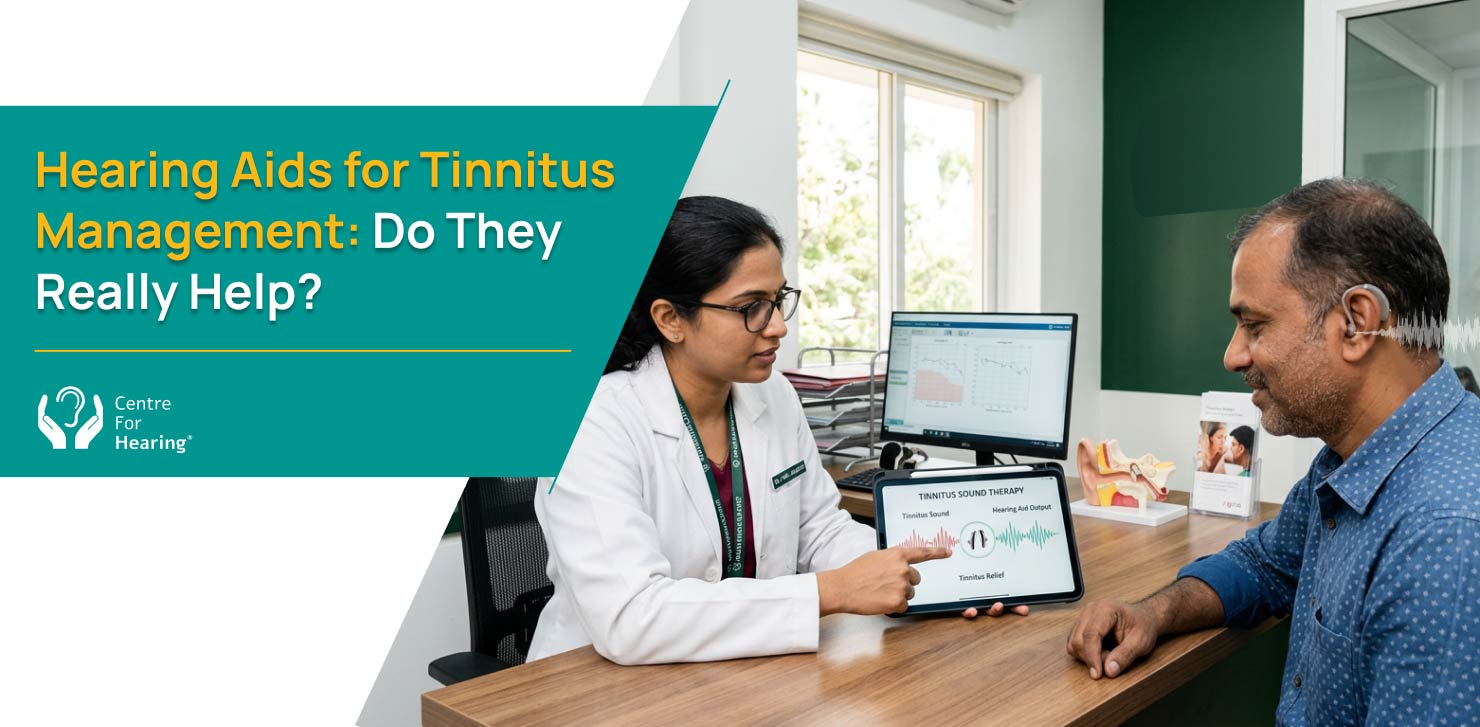
If you’ve been living with tinnitus, you know that no one else can hear what you hear. That persistent ringing, buzzing, or hissing sound has no external source, yet it follows you through meetings, meals, and especially quiet evenings when you’d most like some silence.
A common question people ask when they finally visit an audiologist: Can hearing aids actually help with tinnitus, or are they only for people who struggle to hear conversations?
The short answer is yes, they can help, though not in the way many people expect. This article explains how and why, what the research says, and what a realistic outcome might look like for you.
Understanding Tinnitus: What Is Actually Happening
What Is Tinnitus?
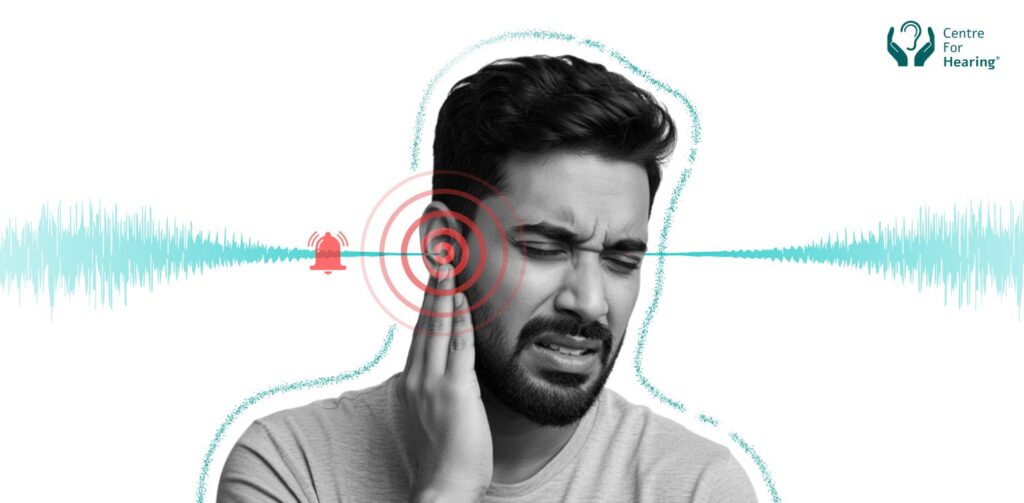
Tinnitus isn’t a disease. It’s a symptom, one that signals something else is going on in the auditory system. The sounds you perceive, whether ringing, whooshing, clicking, or a high-pitched tone, are generated by your own brain rather than by any sound in the environment.
Subjective vs. Objective Tinnitus
There are two broad types. Subjective tinnitus, which is far more common, is heard only by the person experiencing it. Objective tinnitus is rare and can sometimes be detected by a clinician using specialised instruments. Most people dealing with tinnitus have the subjective form.
What Causes It?
The causes are varied: extended exposure to loud noise, age-related changes in the inner ear, certain medications, ear infections, and earwax blockages are all known contributors. In a significant number of cases, tinnitus co-occurs with some degree of hearing difficulty.
🔗 Read more: Types of Tinnitus and Available Treatments: A Complete Guide
The Connection Between Tinnitus and Hearing Loss
This connection is more common than most people realise, and it matters when thinking about treatment. Studies suggest that roughly 90% of people with tinnitus also have measurable hearing difficulty. The two don’t always arrive together. Someone might notice the tinnitus long before they realise they’re missing parts of conversations.
Why the Brain Creates the Phantom Sound

When the inner ear loses the ability to pick up certain frequencies, the brain tries to compensate. It turns up the “gain” on those frequencies internally, essentially trying to fill the silence. Tinnitus is often thought to be a byproduct of that compensatory process. This is why addressing the underlying hearing difficulty sometimes quiets the tinnitus too.
🔗 Read more: Types of Hearing Loss and Can Hearing Aids Prevent Them
How Hearing Aids for Tinnitus Actually Work
Hearing aids help with tinnitus through two distinct mechanisms, and understanding both gives you a clearer picture of what to expect.
Amplification of External Sounds
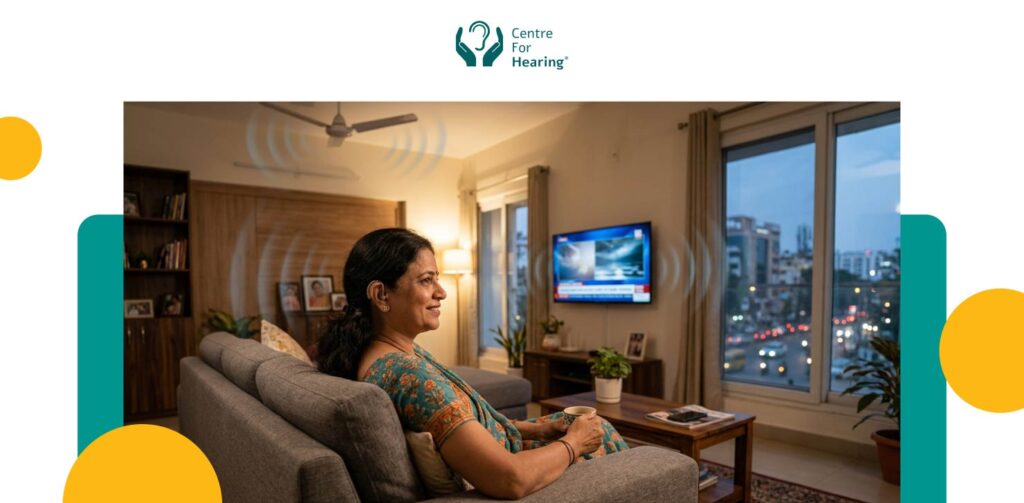
When a properly fitted hearing aid amplifies the ambient sounds you’ve been missing, your brain has more real-world audio input to process. The internal phantom sounds of tinnitus then compete with a richer, fuller soundscape rather than dominating in the relative quiet. For many people, this alone provides noticeable relief, particularly in the evenings when background noise drops away and tinnitus tends to feel loudest.
Tinnitus Maskers in Hearing Aids
A tinnitus masker is a feature built into many modern hearing aids. Instead of amplifying the sounds around you, it generates its own gentle background sound, usually white noise or a soft, wave-like tone, that sits alongside your tinnitus. The point isn’t to drown out the ringing. It’s to give your brain something steadier to hold onto.
Maskers can also run on their own, without amplification, which matters if your tinnitus isn’t paired with measurable hearing difficulty. When the two do overlap, and the numbers earlier on this page suggest they usually do, combining amplification with a masking programme in the same device tends to work better than treating them as two separate problems.
How customisable that masking programme is, and how closely it can be tuned to your specific tinnitus, depends on the brand and platform you choose.
Built-In Sound Therapy Features
Many modern hearing aids from brands like Signia, Phonak, Widex, and ReSound include dedicated tinnitus management programmes. Widex’s Zen programme, covered in more detail further down, is one of the best known examples of this kind of built-in feature. These generate a soft, customised masking sound, often described as ocean waves, white noise, or a gentle tone, that helps shift your attention away from the tinnitus signal. Some platforms let audiologists fine-tune this masking sound directly to the pitch and character of a patient’s specific tinnitus, which improves effectiveness considerably.
Why a Proper Hearing Evaluation Comes First
Before deciding whether hearing aids are appropriate for your tinnitus, you need a thorough audiological evaluation. This goes beyond a basic hearing check.
What the Evaluation Involves
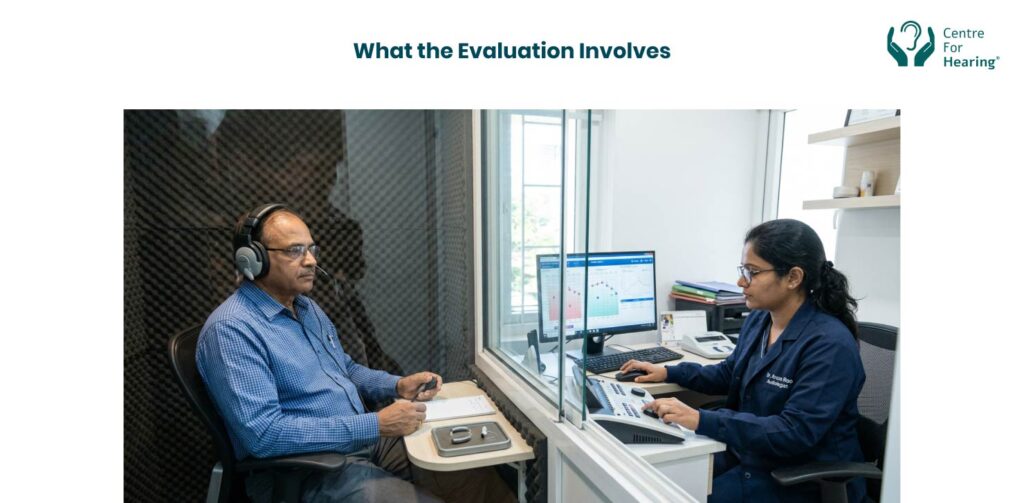
A comprehensive assessment will measure the type and degree of hearing difficulty across different frequencies, identify the pitch and loudness of your specific tinnitus, and rule out any underlying medical causes that need attention before anything else.
At Centre for Hearing®, our experienced M.Sc. Audiologists use calibrated European diagnostic equipment to perform the full range of evaluations, including Pure Tone Audiometry (PTA), Tympanometry, and Oto-Acoustic Emissions (OAE) testing. The results directly inform which hearing aid configuration and which tinnitus management settings are most likely to be effective for you individually.
Video: A Sound Engineer’s Hearing Aid Experience at Centre for Hearing | Patient Testimonial

Why Skipping This Step Costs You
Fitting a hearing aid based on a rough guess of your hearing profile is one of the most common reasons people don’t get the result they hoped for. The evaluation isn’t a formality; it’s the foundation everything else is built on.
Thinking about getting your hearing evaluated?
Centre for Hearing® offers comprehensive audiological assessments across Delhi, Gurugram, Chandigarh, Ludhiana, Jalandhar, and Patiala. Book a FREE Consultation today, with no obligation. Home Visit Facility is also available if you’d prefer to be assessed at home.
Which Hearing Aid Is Right for Tinnitus Management?
Not all hearing aids are equal when it comes to tinnitus management. The features to look for include a built-in tinnitus programme, the ability to stream external audio, good feedback suppression, and connectivity that lets your audiologist fine-tune settings remotely as your needs change.
Widex: Zen Tinnitus Programme
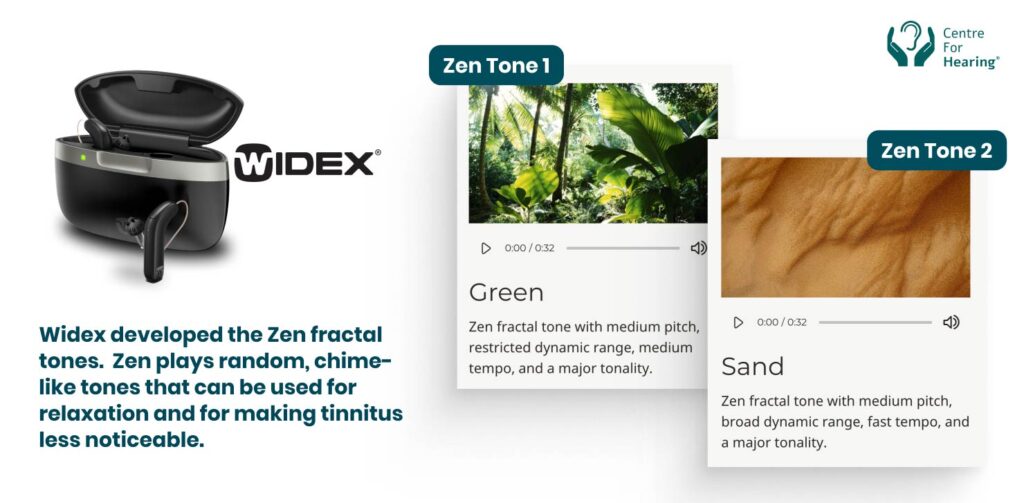
Widex is particularly well regarded in this area. The brand’s Zen programme was designed specifically around tinnitus management and uses fractal tones shown to promote relaxation and reduce the emotional response to tinnitus over time.
Signia: Notch Therapy
Signia’s Notch Therapy targets a narrow frequency band around the tinnitus pitch without masking the broader soundscape. Many users find this more natural than traditional masking, and the approach has solid clinical backing for tonal tinnitus.
Phonak
Phonak offers effective sound relief features within its premium platforms, with strong streaming options and app-based customisation that lets users adjust masking levels throughout the day without visiting a clinic.
ReSound
ReSound similarly provides flexible tinnitus sound generator options alongside good app-based controls, making it straightforward for users to personalise their relief settings across different environments.
Oticon
Oticon’s Tinnitus SoundSupport feature offers a range of relief sounds, including white noise, pink noise, and ocean wave sounds, that can be fine-tuned by your audiologist. Oticon hearing aids are also built around their BrainHearing philosophy, which focuses on giving the brain more complete sound information rather than amplifying selectively.
Starkey
Starkey’s Multiflex Tinnitus Technology lets audiologists shape a customised sound stimulus specifically around the character of your tinnitus, rather than applying a generic masking sound. Starkey also brings strong app-based controls, so users can adjust their tinnitus relief settings discreetly throughout the day.
The right choice depends on your hearing profile, the nature of your tinnitus, your daily environment, and your personal preferences. There isn’t a universal answer, which is exactly why brand-agnostic advice from a qualified audiologist matters so much here.
🔗 Read more: Top Hearing Aid Brands in India for Better Hearing
What to Realistically Expect
Hearing aids can make a meaningful difference to how tinnitus affects your daily life, but it helps to go in with a clear picture of what the process actually looks like.
The First Few Weeks

The adjustment period for tinnitus management with hearing aids is typically several weeks. In that window, your brain is relearning to process sound, and the tinnitus response often takes time to settle. Some users notice an improvement in the first few days; others take a month or two before the full benefit becomes clear.
Video: What to expect at your first Visit to a Hearing Clinic – Hearing check-up | Hearing Aids Trial

The Longer-Term Picture
It helps to keep expectations grounded. The aim isn’t silence. It’s reduced awareness, better sleep, lower anxiety around the sound, and the ability to focus on things other than the ringing. Most people who use hearing aids consistently for tinnitus management report that the sound becomes less intrusive and easier to ignore over time.
Follow-up appointments with your audiologist are important during this period. The settings on your hearing aid may need adjustment as you provide feedback about what’s working and what isn’t.
🔗 Read more: Pure Tone Audiometry: The Essential Hearing Test Explained
Take the First Step: Get Your Hearing Evaluated
Video: Why Centre for Hearing – Hearing Aids | Hearing Tests | Audiology

If tinnitus has been affecting your sleep, your concentration, or your general wellbeing, it’s worth finding out whether hearing aids for tinnitus management could help in your specific case. The only way to know is through a proper evaluation.
Centre for Hearing® has been serving patients across Delhi, Gurugram, Chandigarh, Ludhiana, Jalandhar, and Patiala since 1973, with over 3,00,000 patients who’ve trusted us with their hearing care. Our audiologists take an unbiased, brand-agnostic approach, recommending what’s best for your specific condition rather than what’s easiest to sell.
Book a FREE Consultation today. Home Visit Facility is available for those who prefer to be assessed at home. You can also ask about a Hearing Aid Demo before committing to any device.
Call us at +91 9811 227 269 to speak with our hearing care team.
Frequently Asked Questions
Can hearing aids cure tinnitus?
No. Hearing aids don’t cure tinnitus; they manage it. They work by amplifying external sounds and, in many models, delivering a soft masking sound that reduces how much the tinnitus intrudes on daily life. For most users, the goal is to make the tinnitus less noticeable and less distressing, not to eliminate it entirely.
Do I need a hearing loss diagnosis to use hearing aids for tinnitus?
A thorough audiological evaluation is important before any decision is made. Hearing aids are most effective for tinnitus management when there is also measurable hearing difficulty present. If your hearing tests within normal limits, your audiologist will discuss other approaches that may be more suitable.
Which hearing aid brand is best for tinnitus?
Several leading brands have dedicated tinnitus management features. Widex’s Zen programme, Signia’s Notch Therapy, Phonak, and ReSound all offer strong options. The best fit depends on your individual hearing profile, tinnitus characteristics, and lifestyle, which your audiologist will help determine.
How long does it take for hearing aids to help with tinnitus?
Most people need several weeks to notice a meaningful improvement. The brain takes time to adjust to amplified sound and to reduce its focus on the tinnitus signal. Some users report relief within days; for others, the benefit builds gradually over one to two months. Consistent wear and regular follow-up with your audiologist during this period make a significant difference to outcomes.