

 +91 98112 27269
Most people searching for a hearing aid clinic in Ludhiana do roughly the same thing: they Google a few options, check the star ratings, maybe call one or two places, and book whichever one sounds most credible. That usually works. But hearing care is one of those areas where surface credibility and clinical quality are not the same thing, and the gap tends to show up three months after purchase, when the hearing aid (or ear machine, as many people call it) you paid ₹60,000 or more for still doesn’t feel right.
This article is for people who want to spend an extra 15 minutes now to avoid a much more expensive problem later. It’s not a guide on which hearing aid brand to buy. It’s about what to look for in the clinic itself, before you book anything.
Key Takeaways
- A proper hearing aid clinic runs a full diagnostic evaluation before recommending any device. If that step is skipped, walk out.
- The audiologist fitting your ear machine matters as much as the device itself. Always ask about their qualifications upfront.
- A standard first assessment should include at minimum Pure Tone Audiometry and Tympanometry. Speech discrimination testing adds meaningful value on top of those.
- Real Ear Measurement (REM) is the gold standard for fitting verification. Most clinics don’t do it, so the ones that do are worth singling out.
- Aftercare and fine-tuning are not optional extras. Ask about post-fitting support before you commit to anything.
What’s the Difference Between a Hearing Aid Clinic and a Hearing Aid Shop?
This distinction matters, and Ludhiana has both. A hearing aid shop sells devices. It may have a good selection, staff who know the products, and pricing that looks competitive. What it often doesn’t have is a soundproof audiometric testing booth, an experienced M.Sc. Audiologist on site, and the diagnostic equipment to verify how well a fitted device is actually working in your specific ear.
A proper hearing aid clinic has all of that. Before any device is recommended, your hearing is assessed clinically. The resulting audiogram guides the recommendation. The hearing aid is fitted, programmed, and verified against your specific hearing profile. Follow-up visits are built into the process, not treated as optional add-ons.
The simplest test: when you call any clinic to enquire, ask what happens before they recommend a hearing aid. If the answer is anything other than “we do a hearing test first,” take that seriously.
Why the Audiologist Matters as Much as the Hearing Aid
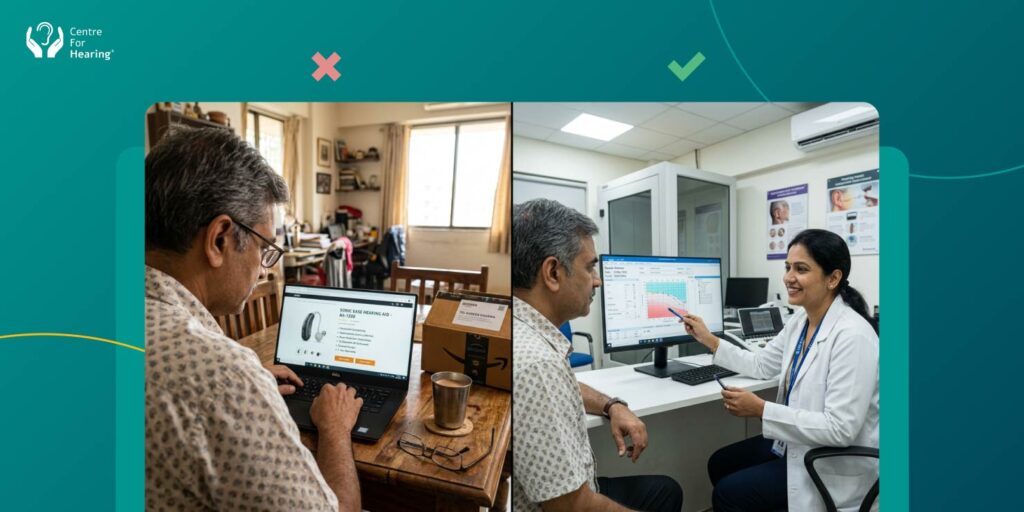
This is the part of the decision that most people underestimate. You might spend weeks comparing Phonak versus Signia versus Widex, reading reviews and spec sheets, then walk into a clinic and hand the actual recommendation to whoever is standing behind the counter. That’s not unreasonable, but whether it works depends almost entirely on who that person is and what qualifications they hold.
In India, audiologists should hold at minimum a Bachelor’s or Master’s degree in Audiology and Speech-Language Pathology and be registered with the Rehabilitation Council of India (RCI). When visiting a hearing aid clinic in Ludhiana, asking about your audiologist’s qualifications is a fair and direct question. Any reputable clinic will confirm them without hesitation.
Experience matters too, though it’s harder to verify upfront. A practical way to judge it during your first visit: does the audiologist ask about your lifestyle before pulling out a catalogue? Do they ask about your occupation, your social environment, the specific situations where hearing feels most difficult? A proper assessment begins with questions about your daily life. Someone fitting an ear machine without understanding when and where you need to hear most clearly is aiming at a moving target.
What a Proper Hearing Assessment Includes
Any reputable hearing aid clinic in Ludhiana should conduct a formal hearing evaluation before recommending a device. Here’s what that typically involves:
1. Pure Tone Audiometry (PTA)
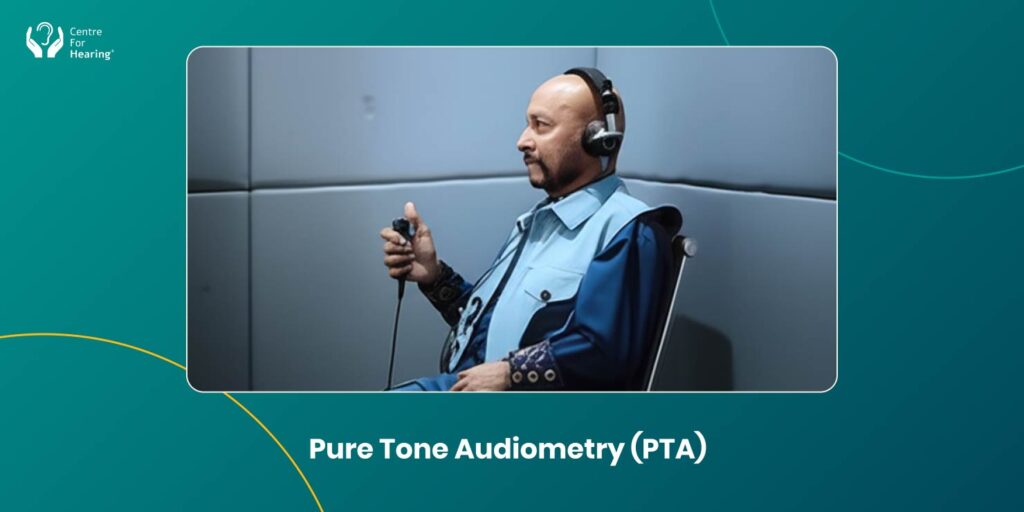
PTA is the foundation. It maps your hearing thresholds across frequencies from 250 Hz to 8000 Hz and produces an audiogram that shows the degree, type, and shape of your hearing loss. Every hearing aid recommendation should start here.
2. Tympanometry
Tympanometry tests middle ear function. It rules out conductive causes of hearing loss, like fluid behind the eardrum or a perforated eardrum, before a sensorineural device is prescribed. Many clinics skip this test. It’s worth asking whether it’s part of the initial assessment.
3. Speech Discrimination Testing
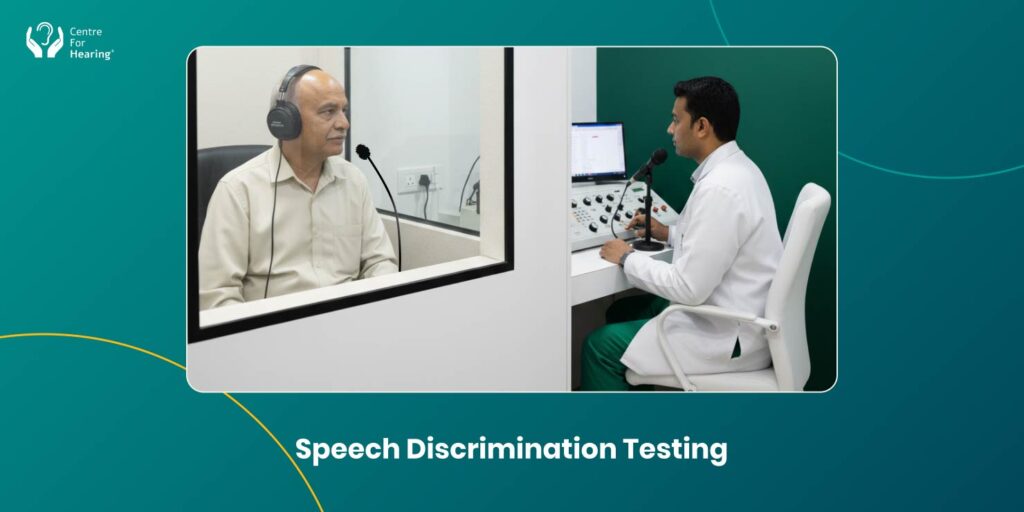
Speech discrimination testing is something most people don’t know about. Your audiogram shows how loud sounds need to be for you to hear them. Speech discrimination testing checks how clearly you hear speech once it’s loud enough. Two patients with identical audiograms can have very different speech clarity scores, and those scores affect which type of hearing aid works best for each of them.
Depending on your history, additional tests like OAE (Otoacoustic Emissions) or BERA (Brainstem Evoked Response Audiometry) may be recommended. Not every appointment requires all of these, but PTA and Tympanometry are a reasonable minimum before any device recommendation is made.
You can also take a free online hearing test from Centre for Hearing® before your clinic visit. It won’t replace a clinical assessment, but it gives you a useful starting point and helps you come in with some idea of what you’re dealing with.
What Should the Hearing Aid Fitting Process Look Like?
Here’s something that rarely comes up in hearing aid research: the same hearing aid, fitted differently, can perform very differently in two different ears. A ₹1.5 lakh Phonak fitted poorly will often underperform a well-fitted ₹60,000 ear machine. The fitting process is that significant.
Prescription Target Matching
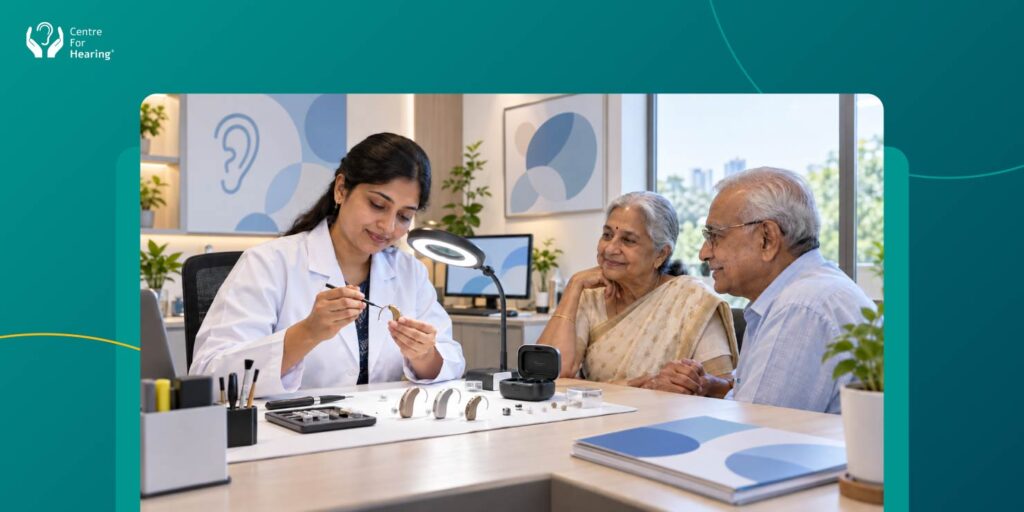
Prescription target matching is the starting point. Your audiologist programs the hearing aid using manufacturer software, adjusting gain at each frequency based on your audiogram. The prescription formula chosen, either NAL-NL2 or DSL v5, depends on your age, severity, and lifestyle preferences.
Real Ear Measurement (REM)
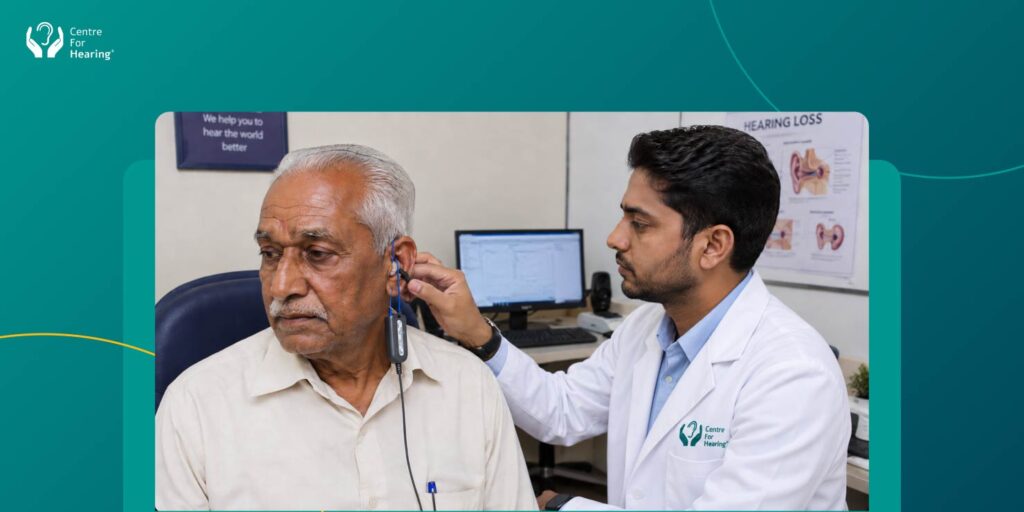
Real Ear Measurement (REM) is the gold standard in fitting verification. A small probe microphone is placed in your ear canal while the hearing aid is running, measuring how the device performs inside your actual ear. This matters because ear canal shape and volume vary from person to person and change how a device’s acoustic output behaves. Clinics that do REM are worth noting. Most don’t.
Orientation and Follow-up
Orientation and follow-up are where a lot of clinics go quiet. Wearing a hearing aid for the first time is disorienting. Sound quality feels different. Background noise may seem louder than expected. That’s a normal adjustment period, not a sign that the device is wrong. A good clinic schedules a follow-up two to four weeks after fitting, makes fine-tuning part of the process, and has a clear support channel if something feels off. If a clinic hands you a box and says “call us if there’s a problem,” ask what that process actually looks like before you agree to it.
Ready to book at Centre for Hearing®’s Ludhiana clinic? The first appointment is free, with no obligation to purchase. Book a Free Consultation or call +91 8288011405 directly.
What Red Flags Should You Watch For When Comparing Hearing Aid Clinic in Ludhiana?
When you’re comparing a few options for a hearing aid clinic in Ludhiana, a few patterns are worth watching:
- A device recommendation before the hearing test is finished. If someone is steering you toward a specific brand or model before your audiogram is complete, they’re selling, not assessing.
- Pressure to purchase on the first visit. Hearing aids are a significant purchase and a long-term commitment. A clinic that makes you feel like the deal expires today is not one that’s confident in its aftercare.
- No clarity on post-fitting support. Fitting is not a one-time event. Ask how many follow-up visits are included. Ask what happens if the fit doesn’t feel right after three weeks. Vague answers are informative.
- A single-brand focus regardless of your audiogram. Clinics that stock several brands are in a better position to recommend the right one for your specific hearing profile. A clinic with a heavy commercial lean toward one manufacturer may not be recommending what’s best for you.
What Should You Ask Before Booking a Hearing Aid Clinic in Ludhiana?
If you’re evaluating two or three clinics and want a fast way to compare them, these questions cover most of what matters:
- Is there an experienced M.Sc. Audiologist on site every day, or is it appointment-based with someone who visits periodically?
- What tests are included in the first appointment, specifically?
- Is a Hearing Aid Demo and Experience offered before purchase?
- What does post-fitting support look like, and for how long?
Clear, specific answers to all four is a good sign. Evasive or vague answers to any one of them is useful information.
Centre for Hearing® in Ludhiana
Book a free consultation at Centre for Hearing® Ludhiana. No referral needed, no commitment required on your first visit.
📞 +91 9811 227 269 | care@centreforhearing.org | Find our clinic
Established in 1973, Centre for Hearing® now operates clinics across Delhi, Gurugram, Chandigarh, and Punjab. Our Ludhiana clinic is part of a network that has served more than 3,00,000 patients across North India.
Our Ludhiana clinic:
Shop No. B-249, BRS Nagar, On DAV School Road, Ludhiana – 141012
📞 8288011405
What we offer at this clinic:
- Full diagnostic evaluation: PTA, Tympanometry, Speech Audiometry, OAE, and BERA.
- REM-guided fitting for verified, accurate hearing aid programming.
- Hearing aids from Phonak, Signia, Widex, ReSound, Oticon, and Starkey.
- Free first consultation and hearing assessment.
- Hearing Aid Demo and Experience before purchase.
- Home visit facility for patients who are unable to travel to the clinic.
- Ongoing fine-tuning and aftercare support.
Because we work across multiple brands and aren’t tied exclusively to any single manufacturer, our recommendation comes from your audiogram and your lifestyle, not our inventory. You can explore current hearing aid prices or read about the different styles and form factors before your visit. It helps to come in with a few questions ready.
To understand the difference between seeing an audiologist and an ENT for hearing loss, this guide is worth a read before your appointment.
Frequently Asked Questions
1. Is the first consultation at Centre for Hearing®’s Ludhiana clinic free?
Yes. The initial hearing assessment and consultation is free. This includes a formal hearing test, case history discussion, and an explanation of your results. There’s no obligation to purchase at the end of the visit and no pressure to book a follow-up immediately.
2. How long does a first appointment at a hearing aid clinic in Ludhiana typically take?
A standard first visit, including case history, pure tone audiometry, and results discussion, takes between 45 minutes and 1 hour. If additional tests like Tympanometry or OAE are recommended, allow closer to 90 minutes. It’s worth giving yourself that time rather than trying to squeeze it between other commitments.
3. Can children get a hearing assessment at the Ludhiana clinic?
Yes. Our experienced M.Sc. Audiologists are trained in paediatric hearing assessment. For infants and young children who cannot respond to standard audiometry, objective tests like BERA (Brainstem Evoked Response Audiometry) and OAE (Otoacoustic Emissions) are used. These don’t require the child to respond actively and are safe for all ages.
4. Do I need a doctor’s referral to visit a hearing aid clinic?
No referral is needed to book an appointment. You can come in directly for a hearing test and assessment. If our evaluation identifies something that requires ENT attention, such as sudden hearing loss or a middle ear condition, we’ll advise you on next steps and refer you appropriately.
5. Is a home visit available in Ludhiana?
Yes. Centre for Hearing® offers a home visit facility for patients who find it difficult to travel to the clinic, including elderly patients and those with mobility difficulties. Contact our Ludhiana team at 8288011405 or reach us on +91 9811 227 269 to arrange a visit.