
 +91 98112 27269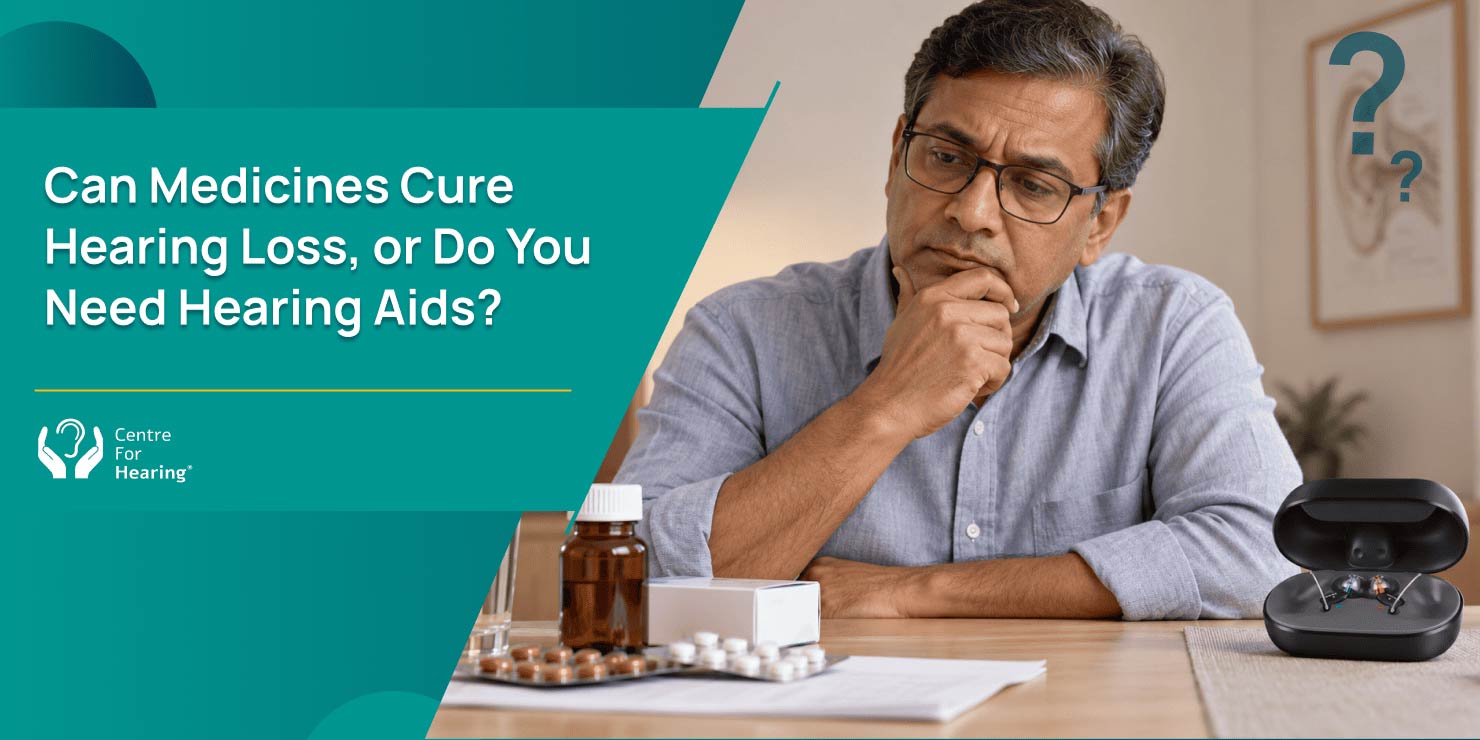
You’ve probably tried the easier options for hearing issues. Maybe an ENT gave you ear drops for a blockage, or you took a course of antibiotics for an infection and hoped your hearing would come back once it cleared. If it didn’t, and someone’s now telling you a hearing aid is the next step, it’s a fair question to ask: is there a tablet, injection, or course of treatment that could fix this instead? The honest answer depends on what’s actually causing your hearing loss, not on what you’d prefer the answer to be.
Some hearing loss responds to medicine. Some respond to surgery. And a large share of it, the kind most Indian adults over 50 actually have, doesn’t respond to either, because the damage isn’t something a pill can reach.
Key Takeaways
- Medicine works for earwax blockage, middle ear infections, and ‘sudden’ sensorineural hearing loss, but the latter must be treated within 24–72 hours of onset.
- Most adult hearing loss is sensorineural, caused by age or noise exposure. Cochlear hair cells don’t regenerate, and no drug on the market reverses that.
- Some medicines (high-dose aspirin, certain IV antibiotics, chemotherapy drugs) can damage hearing further, a side effect called ototoxicity.
- A pure tone audiometry test is the only reliable way to identify your type of hearing loss and whether medicine is even relevant.
- Hearing aids or an ear machine don’t restore your hearing to what it was; they amplify and process sound for your remaining hearing.
Which Types of Hearing Loss Can Medicine Actually Treat?
Medicine works when the problem sits in the outer or middle ear, or when it’s caught within days of starting.
- Earwax blockage: Not fixed with a pill, but with syringing or micro-suction at a clinic. Hearing usually returns immediately once the wax is out.
- Middle ear infections (otitis media): Antibiotic or antifungal drops clear the infection, and hearing typically recovers alongside it.
- Otosclerosis: Where a small bone in the middle ear stiffens and stops conducting sound properly. This is managed surgically (a stapedectomy) in eligible cases, not with a drug, though hearing aids work well here too if surgery isn’t an option.
- Sudden sensorineural hearing loss: This is the one genuine exception on the inner-ear side, and it’s time-critical. High-dose oral steroids, sometimes combined with steroid injections through the eardrum, can reverse it if you’re treated early. The window matters more than almost anything else in this list: outcomes are best within the first 24 to 72 hours, and the odds of meaningful recovery drop sharply if treatment starts after two weeks. If one ear suddenly goes muffled or silent over a day or two, that’s an emergency, not a “wait and see for a week” situation.
| Type of hearing loss | Can medicine help? | What actually happens |
| Earwax blockage | Yes | Removed by a clinician, not treated with a tablet |
| Middle ear infection | Usually | Antibiotic or antifungal drops clear the infection |
| Otosclerosis | Partially | Managed with surgery; hearing aids are the non-surgical route |
| Sudden sensorineural hearing loss | Sometimes, if caught early | High-dose steroids within days of onset |
| Age-related or noise-induced hearing loss | No | No drug regrows the damaged cells; this is where hearing aids come in |
Why Can’t Medicine Reverse Most Hearing Loss?
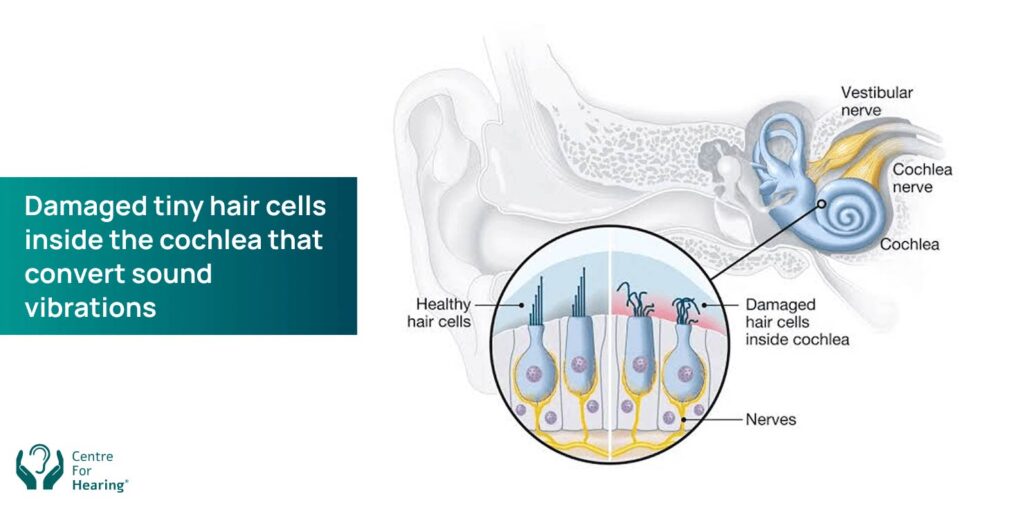
The part that catches most people off guard is that hearing loss isn’t always about something broken that can be repaired. In most adults, especially hearing loss linked to age or years of noise exposure, the tiny hair cells inside the cochlea that convert sound vibrations into signals your brain can read have simply worn down. Unlike some animals, human inner-ear hair cells don’t regrow once they’re damaged. There’s no tablet, injection, or ear drop on the market, in India or anywhere else, that reverses that.
There’s one narrow exception worth knowing about, mostly because you may see headlines about it. In April 2026, the US FDA approved Otarmeni, the first gene therapy for a genetic form of hearing loss caused by mutations in the OTOF gene. It’s a one-time treatment for an ultra-rare congenital condition affecting an estimated 50 newborns a year in the US. It isn’t a treatment for age-related or noise-induced hearing loss, and it isn’t currently available in India. If a “cure for hearing loss” headline crosses your feed in the next few years, this is probably the one behind it, and it’s worth asking your audiologist whether it has any bearing on your specific case. For the overwhelming majority of adults with hearing loss, it won’t.
Can Some Medicines Make Hearing Loss Worse?
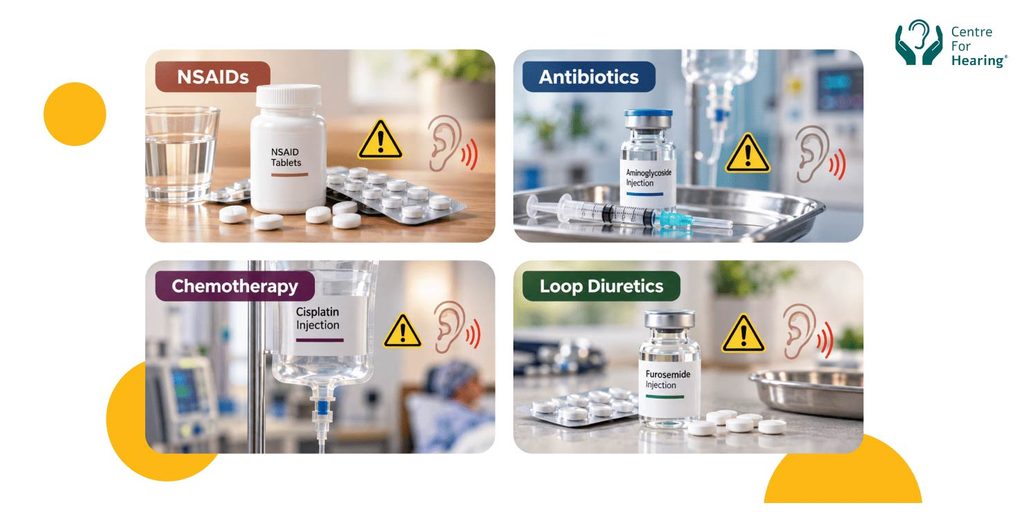
This is the part worth actually acting on. A handful of medicine categories are known to damage hearing rather than fix it, a side effect called ototoxicity.
- High-dose aspirin and other NSAIDs. Usually reversible once you stop, but worth flagging to your doctor if you notice ringing or muffled hearing.
- Certain antibiotics, particularly aminoglycosides like gentamicin and streptomycin, given intravenously.
- Chemotherapy drugs, cisplatin especially, where the risk is often accepted because treating the cancer takes priority.
- Loop diuretics such as furosemide, particularly at high doses or given by IV.
Don’t stop a prescribed medicine on your own based on this list. If you’re on any of these and you’ve noticed a change in your hearing since starting, get it checked rather than waiting it out.
You can book a free hearing test or call Centre for Hearing® at +91 9811 227 269 to talk it through with an audiologist first.
So When Does It Actually Come Down to Hearing Aids?
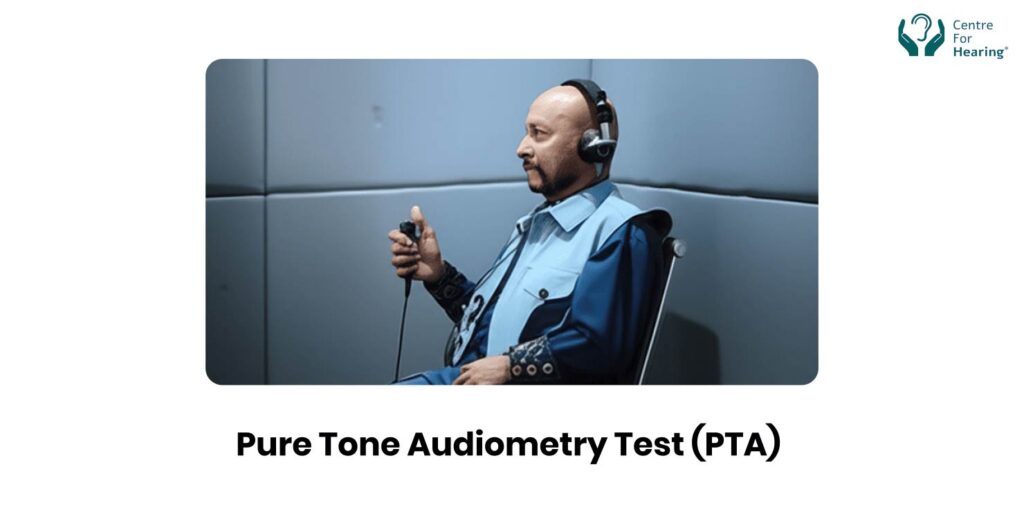
An audiologist settles this with a pure tone audiometry test, not a guess. It tells you two things: what type of hearing loss you have, and how severe it is.
If the cause is conductive and treatable, medicine or surgery gets tried first.
If the test confirms sensorineural hearing loss, and for most adults, that’s what it confirms, there’s no medical fix to try. Hearing aids are the primary treatment at that point, not a fallback option after medicine has failed.
What that looks like in practice depends on the degree of loss: for mild to moderate sensorineural loss, a receiver-in-canal (RIC) hearing aid tends to be the most commonly fitted style, while more significant loss often points toward a behind-the-ear (BTE) device for the additional amplification range.
It helps to be honest about what hearing aids or ear machines actually do here too. They amplify and process the sound reaching your remaining hearing; they don’t restore it to what it was. Most people need a short adjustment period to get used to how voices and background noise sound again, and getting the fitting right, not just the device, is a big part of how well that adjustment goes.
For severe to profound hearing loss that hearing aids can’t adequately correct, a cochlear implant may be the next conversation. For mixed or conductive hearing loss where surgery isn’t right for you, bone conduction devices are worth asking about too.
What About Ear Drops, Tonics, and ‘Hearing Loss Capsules’ Sold Online?

If you’ve searched for this topic at all, you’ve probably come across Ayurvedic oils, homeopathic drops, or capsules claiming to restore hearing naturally. None of them are backed by clinical evidence that they regenerate cochlear hair cells or reverse sensorineural hearing loss. In the rare case where a vitamin or mineral deficiency is genuinely contributing to hearing or balance issues, supplementing that specific deficiency, once it’s actually diagnosed with a blood test, can help. That’s different from taking a supplement on the off chance it works. If a product’s claims sound too close to “reverses hearing loss,” that’s the sign to ask an audiologist rather than order it.
Why People Choose Centre for Hearing®
We’ve been doing this since 1973, over 50 years now, and we’ve worked with more than 3,00,000 satisfied customers across that time. Our audiologists are experienced M.Sc. Audiologists, and because we’re brand-agnostic partners for Phonak, Signia, Widex, Oticon, Starkey, and ReSound, the recommendation you get is based on what suits your hearing loss and lifestyle, not on which brand we’re pushing that month. You can try before you commit too: every fitting comes with a hearing aid demo, and if getting to a clinic is hard, we offer home visits as well. It’s a small thing, but for someone who’s been putting this off for a while, not having to make an extra trip out sometimes makes the difference.
Ready to Find Out What’s Actually Causing Your Hearing Loss?
The only way to know which category you fall into (treatable, time-sensitive, or permanent) is a proper hearing test, not another week of waiting to see if it improves on its own. Centre for Hearing® has clinics across Delhi, Gurugram, Noida, Chandigarh, Ludhiana, Jalandhar, and Patiala.
Find your nearest clinic, book an appointment, or call us at +91 9811 227 269 (care@centreforhearing.org).
If cost is part of what’s holding you back, our hearing aid prices page breaks down what different types of hearing aids actually cost in India.
Frequently Asked Questions
1. Can hearing loss be cured with medicine?
Only in specific situations: earwax blockages, middle ear infections, and sudden sensorineural hearing loss caught within the first two weeks (ideally the first 24 to 72 hours). Most permanent hearing loss, especially age-related or noise-induced hearing loss, doesn’t respond to medicine because it involves inner-ear cells that don’t regenerate.
2. Is there an ear drop or tablet that reverses hearing loss?
No approved ear drop, tablet, or supplement reverses sensorineural hearing loss. If a product claims to do this, treat it as a marketing claim rather than a clinical one, and check with an audiologist before spending money on it.
3. How urgently should I get sudden hearing loss checked?
Very urgently. If one ear suddenly goes muffled, distorted, or silent, treat it like a medical emergency and get to an ENT or audiologist within 24 to 72 hours if you can. Steroid treatment is far more effective the sooner it starts, and the chances of recovery drop substantially after two weeks.
4. Will hearing aids bring my hearing back to normal?
No, and it’s worth knowing that going in. Hearing aids amplify and process the sound that reaches your remaining hearing; they don’t repair the underlying damage. Most people adjust to how sound feels different over the first few weeks, and a proper fitting by an audiologist makes a real difference to how natural that adjustment feels.
4. Where can I get tested and fitted for hearing aids in India?
Centre for Hearing® runs clinics in Delhi, Gurugram, Noida, Chandigarh, Ludhiana, Jalandhar, and Patiala, with experienced M.Sc. Audiologists, free hearing tests, and a Hearing Aid Demo and Experience before you commit to a device. Home visits are available if getting to a clinic isn’t easy.