

 +91 98112 27269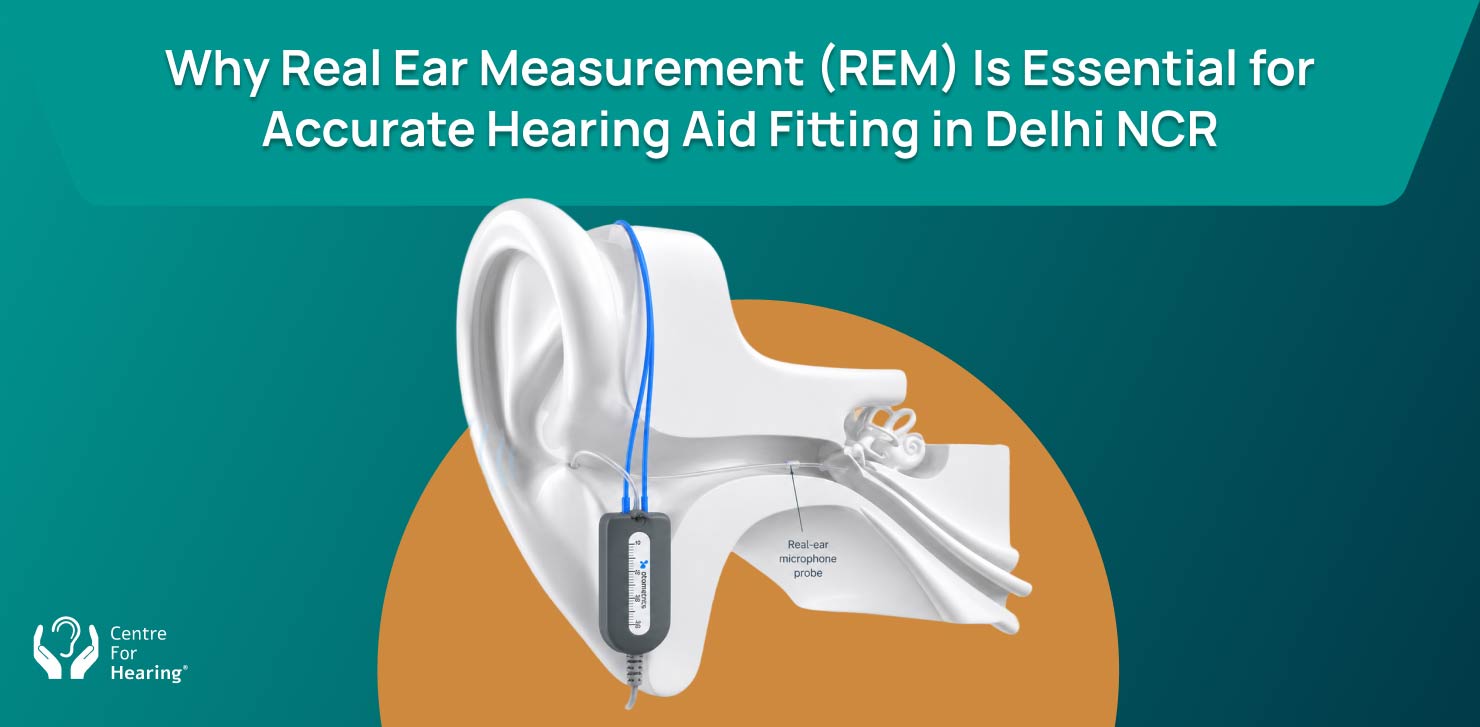
Picking the right hearing aid brand is only half the job. How well that hearing aid is actually programmed for your ears is what decides whether you hear more clearly, or simply hear louder without hearing better. This programming depends on the experience and knowledge of your audiologist, but also on the technical equipment being used at your clinic.
Most clinics in India program hearing aids using the manufacturer’s built-in software prediction and stop there.
At Centre for Hearing®’s clinic in Delhi, we go a step further with Real Ear Measurement (REM), a test that checks whether your hearing aid is delivering the sound it’s supposed to, inside your actual ear canal, not just on a screen.
Key takeaways
- Real Ear Measurement (REM) uses a thin probe microphone in your ear canal to measure the exact sound reaching your eardrum while you wear your hearing aid.
- Manufacturer software predicts hearing aid output. REM measures it directly, which matters because ear canal shape and size vary from person to person.
- Leading audiology bodies including the British Society of Audiology and the American Academy of Audiology recommend probe-microphone verification as standard practice.
- REM is not routinely offered at most hearing aid clinics in India, largely due to equipment cost and the additional clinical time it needs.
- Centre for Hearing® offers REM at its Old Rajender Nagar (Central Delhi) clinic, serving patients from across Delhi NCR, including Gurgaon, Noida, and Dwarka.
- The test itself takes a few extra minutes at your fitting appointment and involves no discomfort.
What Is Real Ear Measurement, and How Is It Different From Standard Hearing Aid Programming?
When you get hearing aids fitted, the audiologist typically feeds your audiogram into the hearing aid manufacturer’s software, which then estimates the settings your ears need. That’s how most fittings work everywhere, including at many clinics offering the ear machine near you. The estimate is based on average ear canal data, not your ear canal specifically.
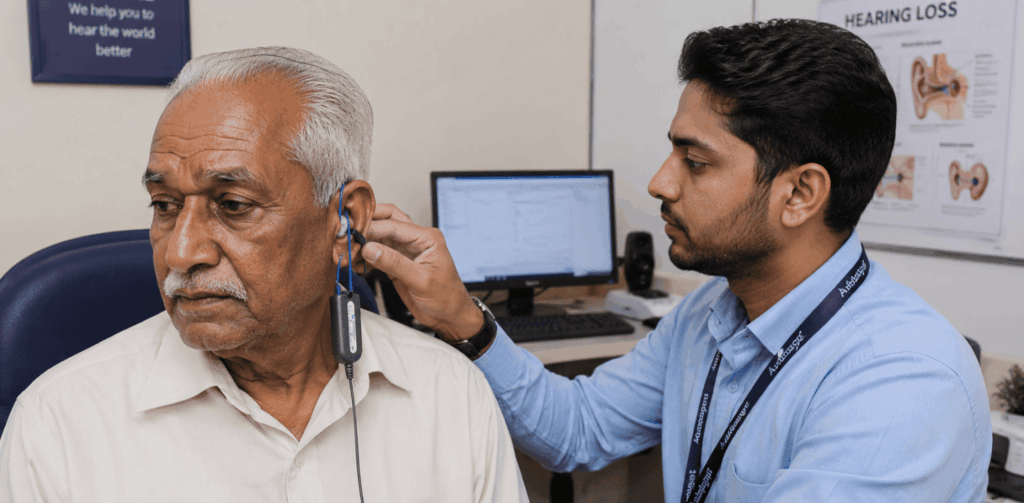
Real Ear Measurement, sometimes called probe microphone measurement, replaces that estimate with an actual reading. A soft, thin tube is placed inside your ear canal alongside your hearing aid, and as speech-like sounds play through a small speaker, the equipment records exactly how much sound reaches your eardrum.
Why the Difference Matters
Hearing aid software knows your hearing loss. What it doesn’t know:
- your ear canal resonance
- venting
- earmould acoustics
- insertion depth
- dome effects
A hearing aid programmed with identical settings can sound completely different on two people for these reasons. Software prediction can’t account for that. REM does.
Why Do Two People With the Same Hearing Loss Need Different Hearing Aid Settings?
Ear canal acoustics aren’t standard from person to person. Canal length, width, and even the amount of ear wax present all affect how much sound is amplified or dampened before it reaches the eardrum. Without measuring this directly, an audiologist is fitting your hearing aid to an average ear that may not resemble yours at all.
| First-Fit Programming (Software Only) | REM-Verified Fitting | |
| Basis for settings | Manufacturer’s average-ear prediction | Your actual ear canal measurement |
| Accounts for individual ear canal shape | No | Yes |
| Follow-up adjustment visits | Often needed | Typically fewer |
| Confidence in fit accuracy | Estimated | Measured and verified |
Why Is Real Ear Measurement Considered the Gold Standard Internationally?
This isn’t a Centre for Hearing® opinion. Professional audiology bodies across several countries have published formal guidance on this. The British Society of Audiology’s practice guidance on probe microphone measurements recommends verification for hearing device fittings, and the American Academy of Audiology’s clinical practice guidelines similarly call for probe-microphone verification to be completed for every fitting. ASHA’s own evidence review describes in-situ real ear measurement as the most direct method available for verifying a hearing device.
Where the evidence gets more cautious is on patient outcomes specifically. A Cochrane-affiliated systematic review protocol notes that while REM clearly improves how closely a hearing aid matches its prescribed target, whether that translates into better patient-reported outcomes is still being studied. So the honest framing is this: REM is the accepted way to verify a fitting is technically correct. It’s not a guarantee that every patient will notice a dramatic difference, though most do.
Why Isn’t REM Offered at Every Hearing Aid Clinic in India?
If REM is this well established, a fair question is why it isn’t standard everywhere. A few practical reasons come up repeatedly in clinical practice:
- The equipment involves a real investment, and it needs annual calibration.
- Every fitting appointment takes longer when REM is included.
- Audiologists need specific training to run the test and interpret the results correctly, not just administer it.
- Many clinics find it easier to rely on the manufacturer’s software and skip the extra verification step.
None of these are excuses, exactly. They’re the reason REM adoption varies so much between clinics, even in countries where professional bodies have recommended it for years.
Coming from Gurgaon, Noida, or Dwarka? Book your appointment at our Old Rajender Nagar clinic.
What Do You Actually Gain From an REM-Verified Fitting?

Patients whose hearing aids go through REM verification tend to report a few consistent things: clearer speech, particularly in group settings; sound that feels natural rather than tinny or artificial; better performance in noisy places like markets or family gatherings; and fewer trips back to the clinic for reprogramming because the fitting was closer to correct the first time.
None of this replaces a good hearing aid. It’s what makes a good hearing aid actually perform the way it was designed to.
What Happens During a Real Ear Measurement (REM) Appointment?

It doesn’t hurt at all. A soft measurement tube sits in your ear canal alongside your hearing aid, much like the probe used in a standard hearing test. Here’s what the appointment actually involves:
- Your audiologist reviews your hearing test results.
- A thin probe tube is placed just inside your ear canal.
- Your hearing aid is fitted in as usual, with the probe still in place.
- Speech-like sounds play through a small speaker in the room.
- The probe measures exactly how much sound is reaching your eardrum, in real time.
- Your audiologist adjusts your hearing aid settings until the readings match internationally recognised targets for your hearing loss.
- Once the readings check out, the probe is removed and you’re done.
The whole process adds roughly 10 to 15 minutes to your regular fitting appointment.
Who Should Ask for Real Ear Measurement Before Buying Hearing Aids?
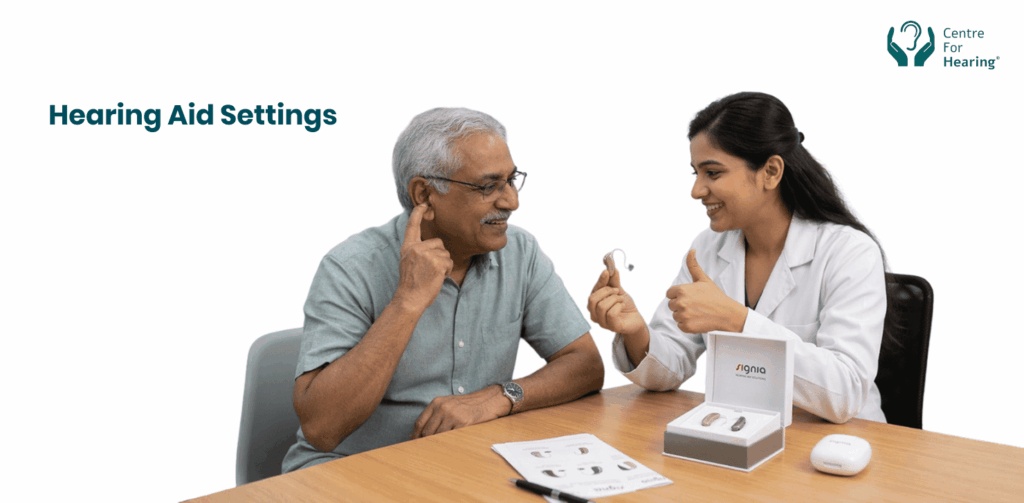
REM is worth asking about if you’re a first-time hearing aid user, if you’re investing in a premium option such as a RIC or IIC hearing aid, or if you already wear hearing aids but still struggle to follow conversations clearly. It’s also worth asking about if you’ve had a fitting elsewhere and never felt fully satisfied with how it sounds. This applies whether you’re considering a BTE device, an ITC model, or exploring options like cochlear implants or bone conduction hearing aids for more complex hearing loss.
If you fit any of these situations, Book a Free Consultation and ask our audiologists whether REM applies to your case.
Where Can You Get an REM-Verified Hearing Aid Fitting in Delhi NCR?
Centre for Hearing® currently offers Real Ear Measurement at our Central Delhi clinic in Old Rajender Nagar, and it’s a short trip whether you’re coming from Gurgaon, Noida, or Dwarka. Before you finalise a hearing aid purchase anywhere, it’s worth asking one direct question: will my hearing aid be verified using Real Ear Measurement, or only programmed with software?
You can check our full range of options on the hearing aid brands and hearing aid prices pages, or start with a free online hearing test if you haven’t had your hearing checked recently. Our experienced M.Sc. Audiologists at Old Rajender Nagar can walk you through whether REM makes sense for your specific case.
Frequently Asked Questions
1. What is Real Ear Measurement (REM)?
REM is a test that uses a thin probe microphone placed in your ear canal to measure the actual sound reaching your eardrum while you wear your hearing aid, rather than relying on software predictions alone.
2. Is REM necessary for hearing aids?
It isn’t legally required, but it’s recommended by major audiology bodies internationally as the standard way to verify that a hearing aid fitting is accurate for your specific ears.
3. Which clinics offer REM in Delhi?
Centre for Hearing® offers Real Ear Measurement at its Central Delhi clinic in Old Rajender Nagar.
4. How long does REM take?
It adds roughly a few extra minutes to a standard hearing aid fitting appointment.
5. Is REM included with hearing aid fitting?
At our Old Rajender Nagar clinic, REM forms part of the fitting process for suitable candidates. Ask your audiologist directly to confirm this for your specific fitting.
6. Why do my hearing aids need verification?
Because ear canal shape and size differ from person to person, the same hearing aid settings can sound completely different on two people with identical hearing loss. Verification confirms the settings are correct for your ears specifically, not just for an average ear.
7. Can my existing hearing aids be checked with REM?
Yes. Even if you bought your hearing aids somewhere else, REM can show whether they’re delivering the amplification your prescription calls for, and whether some fine-tuning would help.
8. Does REM work with all hearing aid brands?
Yes. Since REM measures the sound your hearing aid actually produces rather than reading the manufacturer’s software prediction, it works with most modern hearing aids regardless of brand.
9. Is REM only for new hearing aids?
No. Existing hearing aids can be reverified and readjusted using REM too, especially if the current fit isn’t working well for you.
10. Can REM improve speech understanding?
REM on its own won’t restore your hearing. What it does is confirm your hearing aids are delivering the amplification prescribed for your hearing loss, which for many patients does translate into clearer speech.