

 +91 98112 27269
Hearing aid prices in India can be genuinely difficult to make sense of. Walk into any audiology clinic, and you’ll find one device priced at ₹25,000 and another at ₹2,50,000. Both are called “digital hearing aids.” Both come from reputable international brands. So what exactly is going on?
The confusion is understandable, and it’s one of the most common questions our audiologists hear. Whether you’re comparing hearing aid prices online, asking about the cost of an ear machine at a clinic, or trying to make sense of a brochure, the core question is the same: why does the gap between devices seem so large?
The honest answer is that several independent factors contribute to the final number, and not all of them are obvious from the outside. Below is a clear breakdown of what’s driving the cost of hearing aids in India.
The Technology Tier Is the Biggest Factor
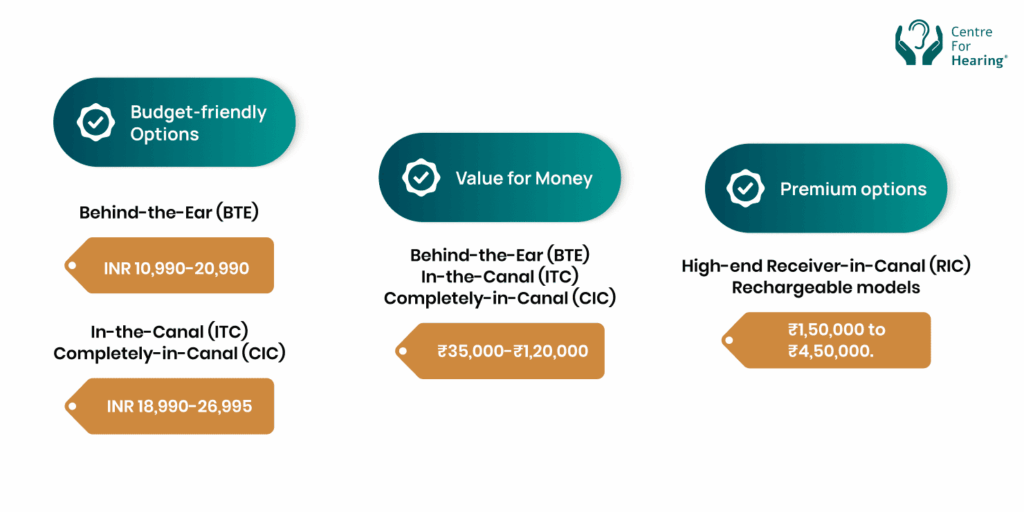
Hearing aids from every major brand, whether it’s Phonak, Signia, Widex, ReSound, Oticon, or Starkey, are sold across multiple technology tiers. These are usually labelled as entry-level, mid-range, and premium, though brands use different naming conventions.
What changes between tiers is the processing power and the sophistication of the algorithms running inside the device.
An entry-level hearing aid amplifies sound. A premium hearing aid does considerably more: it analyses the acoustic environment in real time, distinguishes between speech and noise, adjusts its settings automatically as you move between different listening situations, tracks multiple speakers simultaneously, and suppresses feedback before you even notice it.
The number of processing channels is one useful indicator of this. Entry-level models might have 6 to 12 channels; premium models typically offer 20 or more, with some flagship devices going higher. More channels means the hearing aid can handle complex sound environments, like a restaurant, a family gathering, or a meeting room, with much greater precision.
For someone with mild hearing loss who spends most of their time in quiet environments, an entry-level or mid-range device may serve them well. For someone who leads an active social or professional life, the premium tier typically delivers a meaningfully better experience.
Form Factor Affects Price Significantly
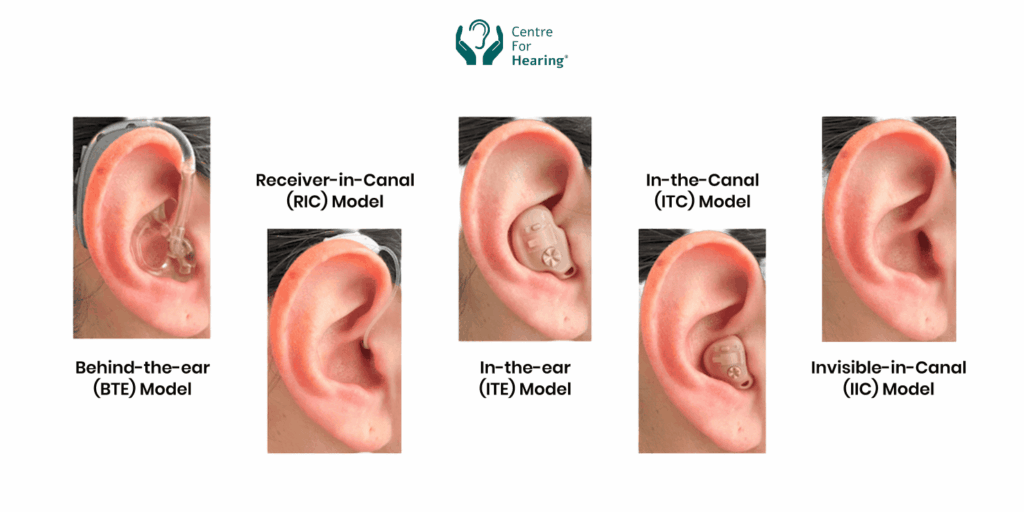
How a hearing aid is worn, and how visible it is, has a direct impact on its price.
Behind-the-ear (BTE) models are the most common and tend to sit at lower price points. Receiver-in-canal (RIC) devices, which are more discreet and suitable for mild to moderate loss, sit in the mid to premium range. In-the-ear (ITE) and in-the-canal (ITC) devices are custom-moulded to your ear, which adds manufacturing cost. At the top end, invisible-in-canal (IIC) hearing aids are essentially invisible once worn. They require a specific ear canal shape to fit, use the smallest components available, and carry a premium accordingly.
Smaller doesn’t always mean better for your specific loss. But if discretion matters to you, you’re paying for miniaturisation, and that’s reflected in the price.
Specific Features Add to the Cost
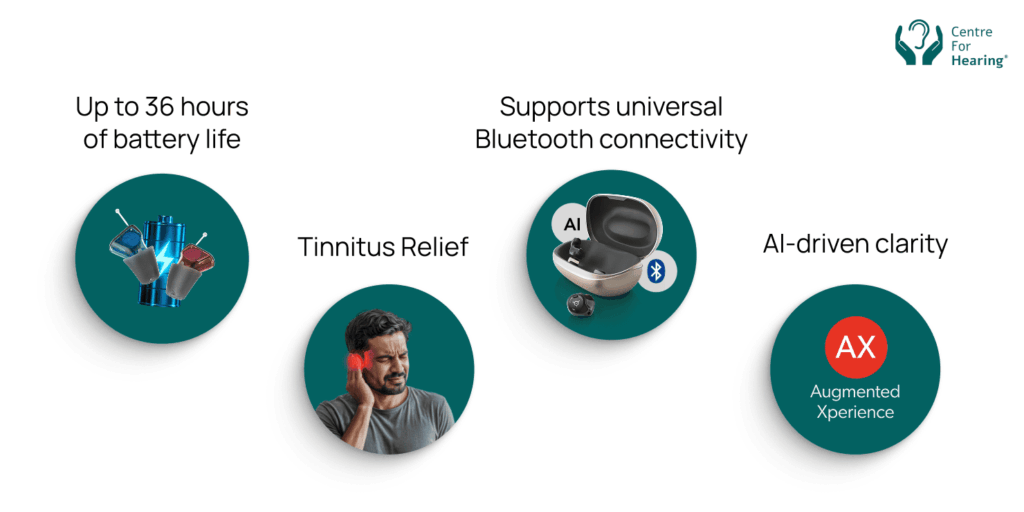
Form factor sets a baseline. On top of that, specific features within each category push the price further, depending on which ones are included.
Rechargeable Batteries
Rechargeable batteries are now standard at mid and premium tiers across most brands. The convenience is real, especially for older users who find changing small batteries difficult. Devices with lithium-ion rechargeable systems typically cost more than their battery-operated equivalents.
Bluetooth Connectivity
Bluetooth allows hearing aids to stream audio directly from smartphones, televisions, and other devices. This is a meaningful quality-of-life feature for many users, but it adds to the component cost and therefore the price.
Tinnitus Management Features
Tinnitus management is built into a number of premium hearing aids, including specific models from Signia, Phonak, and Widex. These features generate therapeutic sound signals to provide relief from ringing or buzzing, and they’re priced accordingly.
AI-driven Environment Classification
This is one of the newer features separating premium devices from the rest. Rather than manually switching programmes for different environments, the hearing aid learns from your listening preferences over time and adjusts automatically. Phonak’s AutoSense OS and Signia’s Integrated Xperience platform are examples of this technology. It works well, but it sits firmly at the premium end.
What’s Bundled With the Device Matters
This is the part of hearing aid pricing that people often overlook, and it’s important.
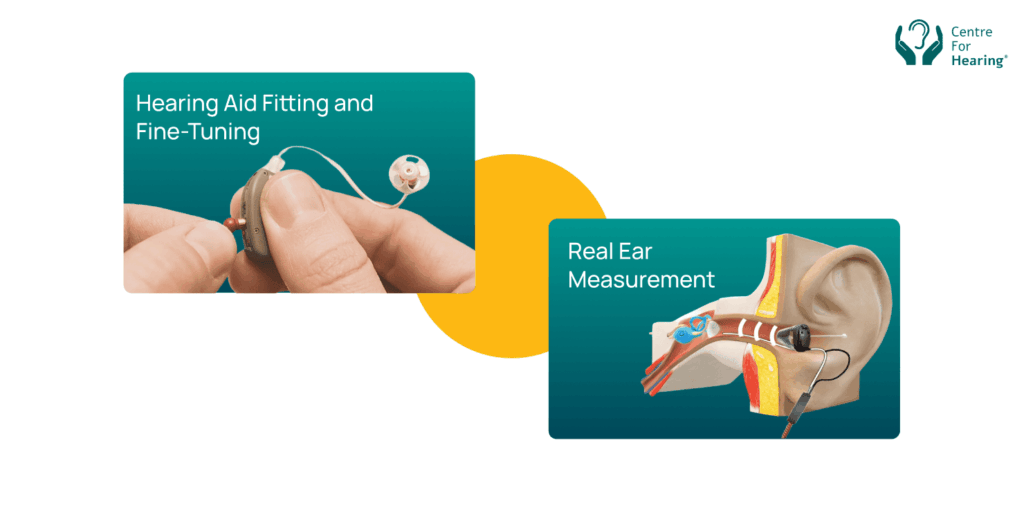
When a reputable audiology clinic quotes you a price, that figure typically includes significantly more than the physical device. It covers the hearing evaluation, the fitting session, follow-up tuning appointments, Real Ear Measurement (REM) verification to confirm the device is programmed correctly for your specific ear canal, and often a trial period that lets you return the hearing aid if it isn’t working for you.
At Centre for Hearing®, warranties, after-care services, and follow-up visits are included in our pricing from the start. These aren’t hidden additions; they’re what make a hearing aid work over time.
A hearing aid that isn’t fitted and tuned properly by an experienced audiologist won’t deliver the performance it’s capable of, regardless of how much it costs. The bundled professional services aren’t a luxury; they’re the reason the device works at all.
Why Cheaper Isn’t Always Cheaper
This point is worth making clearly. A lower-priced hearing aid that doesn’t suit your type of hearing loss, or one that’s fitted without proper diagnostic testing, will likely perform poorly. When that happens, people often abandon the device altogether. They conclude that hearing aids “don’t work for them,” when the reality is that the wrong device was chosen, or fitted incorrectly, or both.
The cost of that mistake isn’t just the purchase price. It’s the months or years of unnecessary hearing difficulty while the problem goes unaddressed, followed by starting the process again.
This is also why buying hearing aids online or through non-specialist retailers carries a real risk. Without a proper audiogram, without speech audiometry, and without Real Ear Measurement, the selection and fitting process is essentially guesswork.
The right question isn’t “what’s the cheapest hearing aid?” It’s “what’s the right hearing aid for my specific loss, lifestyle, and listening needs, and am I getting the professional support to make it work?”
What Hearing Aid Prices in India Look Like in 2026
Without knowing your specific hearing loss and lifestyle, it’s difficult to give a single figure. But here is how 2026 pricing broadly breaks down across the tiers at Centre for Hearing®, for one device:
Entry-level devices (battery-operated, basic digital processing) start from around ₹12,000 and go up to approximately ₹40,000. Essential-class devices with Bluetooth connectivity and rechargeable batteries typically fall between ₹45,000 and ₹80,000. Mid-level models with active noise cancellation and directional processing sit in the ₹85,000 to ₹1,50,000 range. Advanced AI-enabled hearing aids come in between ₹1,50,000 and ₹2,50,000, and premium-class devices for very active lifestyles, large social gatherings, and complex listening environments go from ₹2,75,000 to ₹4,50,000.
One thing worth clarifying: these figures are per device. Most people with hearing loss in both ears benefit from two hearing aids fitted together, which doubles the device cost. Whether binaural fitting is right for you is something your audiologist will assess based on your audiogram.
These are indicative prices for one ear. For a personalised picture based on your audiogram, our team can walk you through the options that make sense for your specific situation.
📞 Book a FREE Consultation at Centre for Hearing®
Our RCI-certified audiologists will assess your hearing, explain what’s driving the right recommendation for your situation, and walk you through current pricing across all the brands we carry. You can also request a free hearing aid trial to experience how a device performs in your real daily environment before committing. Home visits are available for elderly patients.
No pressure. No bias toward any single brand.
Call us on +91 9811 227 269 or visit a Centre for Hearing® clinic in Delhi, Gurugram, Chandigarh, Ludhiana, Patiala, or Jalandhar.
Frequently Asked Questions
Why does the same hearing aid brand cost different amounts at different clinics?
Pricing can vary based on what’s included in the package, whether fitting services and follow-ups are bundled or charged separately, and the level of clinical expertise at the practice. A lower headline price sometimes means unbundled services that add up over time.
A professional clinician might also be charging a premium for his or her years of experience. The price of the hearing aids are usually bundled with the ‘services’ for a period of time. Each clinic values their bouquet of services offered differently.
Are expensive hearing aids always better?
Not universally. A premium device is only better for you if your hearing loss and lifestyle justify the features it offers. An audiologist can match you to the right tier based on your audiogram, not a sales target.
Do hearing aid prices in India include the fitting?
This depends on where you buy them. At Centre for Hearing®, professional evaluation, fitting, and follow-up support are included in our pricing. Always confirm what’s covered before you commit.
What is the cost of a hearing aid or ear machine in India?
Prices vary widely depending on the technology tier, form factor, and what’s bundled with the device. At Centre for Hearing®, hearing aid prices in India start from around ₹12,000 for entry-level devices and go up to ₹4,50,000 for premium AI-enabled models. All major brands sold in India, including Phonak, Signia, Widex, ReSound, and Oticon, are internationally manufactured, and import duties and after-sales infrastructure factor into the final price.
Can I try a hearing aid before buying?
Yes. Centre for Hearing® offers a hearing aid trial period so you can experience how a device performs in your real daily life before making a final decision.