

 +91 98112 27269
You walk into a hearing aids centre, see a price tag of ₹50,000, and think you know what you’re paying. Two years later, you’ve spent ₹80,000. What happened?
The answer is rarely one big surprise. It’s a series of smaller ones: batteries running out every week, a follow-up visit that turned out not to be free, a repair after the warranty expired. Each cost, taken alone, is perfectly reasonable. Together, without any prior warning, they add 30–60% to what you thought you were paying.
This article explains what those costs are, which ones you should actually welcome, and which ones suggest a centre isn’t being fully upfront with you.
Added Costs Aren’t the Problem. Not Being Told About Them Is.
Let’s be clear about something: most costs that catch buyers off guard are not scams. A care plan that covers your device for five years is a sensible thing to buy. So is insurance against accidental damage – hearing aids get dropped, they get exposed to moisture, things happen. A drying and cleaning kit that extends the life of a ₹70,000 device by two years is money well spent. Periodic adjustments as your hearing changes are not optional extras; they’re part of how hearing aids actually work.
The issue isn’t the cost. It’s the timing of the conversation. When a centre quotes you a price and only mentions these extras after you’ve agreed to buy, those same costs stop being legitimate and start feeling like a trap. That’s what makes them “hidden.”
A good hearing aid centre walks you through all of this before you commit to anything. What’s included, what’s optional, what you’ll likely need over the next few years – all of it. That conversation protects you, and it’s the minimum you should expect.
Costs That Are Worth Paying For

These are the additions that genuinely protect your investment. Before you dismiss them, understand what they cover.
1. Extended Warranties and Care Plans
A standard manufacturer’s warranty (usually one to three years) covers manufacturing defects and internal component failures. That’s it. Accidental damage, loss, normal wear and tear – none of that is included.
Extended warranties that cover four to six years typically cost ₹5,000–15,000 depending on the device. If you’re buying for an elderly family member, someone who is physically active, or anyone who travels frequently, that cover is worth considering seriously. The maths usually work out – a single repair for water damage can run ₹8,000–15,000 on its own.
Loss and damage insurance is a separate product, usually ₹3,000–15,000 per year based on the model. For higher-end devices, it’s worth asking about.
At the Centre for Hearing®, both options are explained upfront and the terms are laid out clearly before you make any decision. You won’t discover the exclusions when you try to make a claim.
2. Lifetime Adjustment and Servicing Plans
Your hearing doesn’t stay static. An audiologist who fits your hearing aid well will need to revisit the programming over the first few months, and then periodically as your hearing profile shifts with age or health changes. At centres that charge per visit, this adds up – six visits in the first year at ₹500–1,500 per session can quietly add ₹6,000–9,000 to your total.
This matters more than most buyers realise at the time of purchase. Over five or six years of ownership, free adjustments represent significant savings – and more importantly, they mean you’ll actually go in for them rather than putting it off because of the charge.
3. A Cleaning and Drying Kit
This is a relatively minor cost (₹1,500–3,000) that most audiologists will recommend. Moisture and earwax are the two most common causes of hearing aid failure. A proper drying kit used regularly can add years to the device’s working life and reduce repair frequency. It’s not upselling; it’s maintenance advice.

Costs That Can Catch You Off Guard
The following are where the real surprises tend to happen – either because the centre didn’t explain them, or because buyers didn’t know to ask.
1. Battery Expenses Over Time
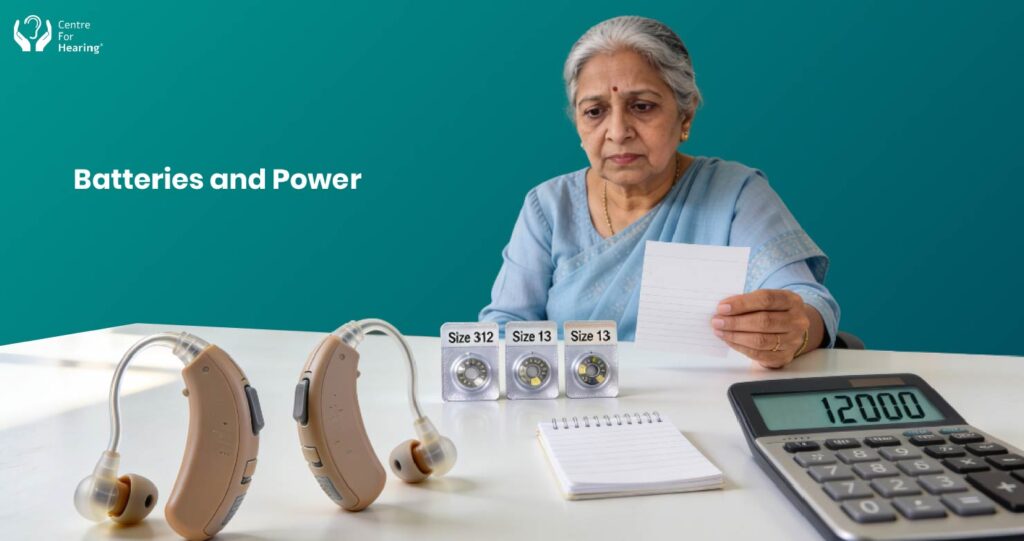
Disposable hearing aid batteries (sizes 312 and 13, most commonly) last five to ten days each. Over a full year, you’ll go through roughly 40–70 batteries per ear. For two hearing aids, that’s ₹3,000–5,000 annually – or ₹15,000–25,000 across five years. Most first-time buyers don’t factor this in when they’re looking at the device price.
Rechargeable models cost ₹10,000–20,000 more upfront, but eliminate the weekly battery expense entirely. There is one thing worth knowing: the internal battery in rechargeable models degrades after four to five years and requires a replacement service (₹8,000–15,000). Over the full ownership period, rechargeables still typically work out cheaper – but neither option should come as a surprise.
Ask any centre you’re considering: what’s the estimated annual battery cost for the model they’re recommending, and if it’s a rechargeable device, what does battery replacement cost and when will it be needed?
2. Per-Visit Charges for Adjustments
At many independent shops and smaller centres, follow-up visits are billed separately. The first fitting might be free; everything after that isn’t. For a buyer who needs five or six adjustments in the first year (which is normal, particularly for first-time hearing aid users), those charges add up before they’ve had the device for twelve months.
Ask specifically: how many follow-up visits are included in the purchase price, and what happens after that?
3. Accessories You Didn’t Know You Were Buying
Accessories are legitimate products. A TV streamer (₹8,000–15,000) helps in situations where background noise makes hearing difficult. A remote microphone (₹12,000–25,000) is useful in specific settings like large meetings or lectures. Earmolds or domes need replacing every one to two years at ₹2,000–5,000 per ear.
The problem isn’t the accessories. The problem is when they’re bundled into a package without a clear explanation of what each one is for and whether you actually need it. A good audiologist asks about your lifestyle – where you spend your time, what situations feel hardest for your hearing – and recommends only what fits your daily reality. If you’re being handed a list of add-ons without that conversation, that’s worth querying.
4. Repair Costs After the Warranty Expires
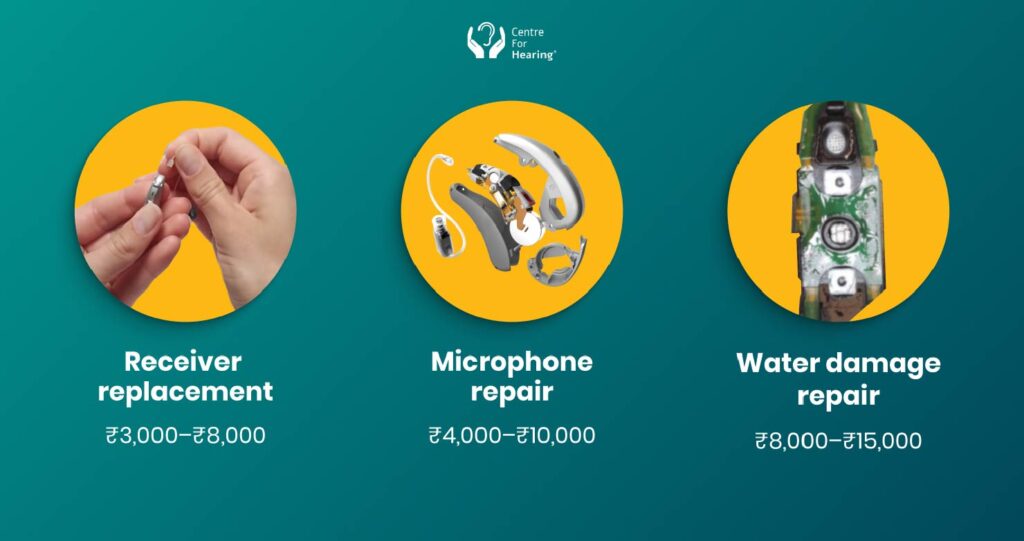
Hearing aids are worn for eight to sixteen hours a day, every day. They encounter body heat, moisture, earwax, and occasional physical impacts. Common repairs after the warranty period:
- Receiver replacement: ₹3,000–8,000.
- Microphone repair: ₹4,000–10,000.
- Water or moisture damage: ₹8,000–15,000.
These costs are normal and not unreasonable. What matters is whether the centre is transparent about repair pricing and processes before you buy – not after something breaks. Ask: what does repair typically cost after the warranty ends, and do they work directly with the manufacturer or send devices to a third party?
Download our Ultimate Guide to Hearing Aid Prices in India to understand the complete costs before you buy.
Red Flags Worth Watching For
The costs above are part of legitimate hearing aid ownership. These, however, are not:
A centre quotes ₹35,000, charges ₹2,000 per follow-up visit, sells batteries at double the market rate, and prices post-warranty repairs at a quarter of the original device cost. What looked like an affordable option ends up more expensive than a higher-priced device from a centre that bundled everything properly.
Other things to watch for: warranty terms that aren’t explained until you try to make a claim; accessories added to your purchase without a clear reason given; promises of a “deal” on the hearing aid itself, with the real margin made on consumables and services afterwards.
And perhaps the most significant red flag of all: buying hearing aids through an online or e-commerce platform. The device might be cheaper, but hearing aids must be calibrated to your specific audiogram. A device that’s correctly priced but incorrectly programmed will perform poorly regardless of how advanced the technology is. Most people who buy online end up visiting a local centre for programming anyway – and paying twice.

How Centre for Hearing® Handles Pricing
Centre for Hearing® has been in hearing healthcare since 1973. They’ve served over 3,00,000 customers across Delhi NCR, Punjab, and Chandigarh. Here’s what their pricing approach looks like in practice.
Every quote includes follow-up adjustments and cleaning for 2 years, which means no surprise bills for routine visits. Charges for a follow-up visit would be Rs.1,000 for fine-tuning AFTER the 2-year period.
Extended warranty options and loss/damage insurance are both explained before purchase, with full terms and costs disclosed upfront.
They stock Phonak, Signia, Widex, ReSound, Oticon, and Starkey – and recommendations are made based on your audiogram and lifestyle, not on what happens to have the highest margin that month. If an accessory is suggested, the audiologist will explain why it’s relevant for your specific situation.
Home visit facility is available across Delhi NCR, Punjab, and Haryana, with no markup on home visit services. Zero-cost EMI options are also available to spread the cost without interest charges.

The Bottom Line
Hearing aids are a long-term purchase. Most people keep the same device for five to seven years, which means the real cost is the sum of the device, the batteries or battery servicing, the adjustments, and any repairs – not just the number on the price tag.
None of that is unfair. What’s unfair is not being told about it. Work with a centre that answers your questions directly, explains every cost before you commit, and includes the things that matter – like lifetime servicing – from the start.
Centre for Hearing® has clinics in Delhi (Central, North, and South), Dwarka, Gurugram (Sector 43, Sector 49, and Palam Vihar), Chandigarh, and across Punjab in Jalandhar, Patiala, and Ludhiana.
Book a free consultation to get a full, honest picture of what your hearing aid will actually cost over time.
📞 +91 9811 227 269 | Book a Free Consultation
Home Visit Facility Available across Delhi NCR, Punjab, and Haryana.
Frequently Asked Questions
1. What is the total cost of owning a hearing aid over five years?
It depends on the device and how you use it, but a realistic estimate for a mid-range hearing aid in India is ₹1,20,000–1,80,000 over five years – covering the device, batteries or battery servicing, adjustments, accessories, and repairs. The easiest way to plan for this is to choose a centre that includes lifetime follow-ups in the purchase price and explains all other costs upfront before you commit.
2. Are rechargeable hearing aids worth the extra cost?
For most people, yes. The upfront premium of ₹10,000–20,000 is generally recovered within two to three years through savings on disposable batteries. They’re also more convenient – no changing small batteries every week. One thing to factor in: the internal battery degrades after four to five years and needs replacing, at a service cost of ₹8,000–15,000. Even accounting for that, rechargeables usually work out cheaper overall.
3. Do I need to buy accessories when I purchase hearing aids?
Not necessarily, and you should be cautious about any centre that suggests otherwise without asking about your lifestyle first. A drying and cleaning kit is a low-cost add-on (₹1,500–3,000) that genuinely protects your device and is worth considering for most buyers. Everything else – TV streamers, remote microphones – depends entirely on how and where you use your hearing. A good audiologist will ask about your daily environment before making any recommendations.
4. What happens if I buy hearing aids online to save money?
Online hearing aids are cheaper upfront, but they come without professional fitting or programming. Hearing aids must be calibrated to your specific audiogram – a device that’s not correctly programmed won’t perform as it should, regardless of its technical specifications. Most people who go this route end up visiting a local audiologist for programming anyway, paying for the consultation separately. The saving at the point of purchase usually disappears quickly.
5. How do I know if a hearing aid centre is being upfront about costs?
The clearest indicator is whether they explain all costs before you’re asked to commit to anything. A good centre will tell you what’s included in the purchase price, what optional extras exist and what each one costs, what the warranty covers and what it doesn’t, and what you’ll likely need over the next few years. If a centre only mentions these things after you’ve agreed to buy, treat that as a warning sign.