
 +91 98112 27269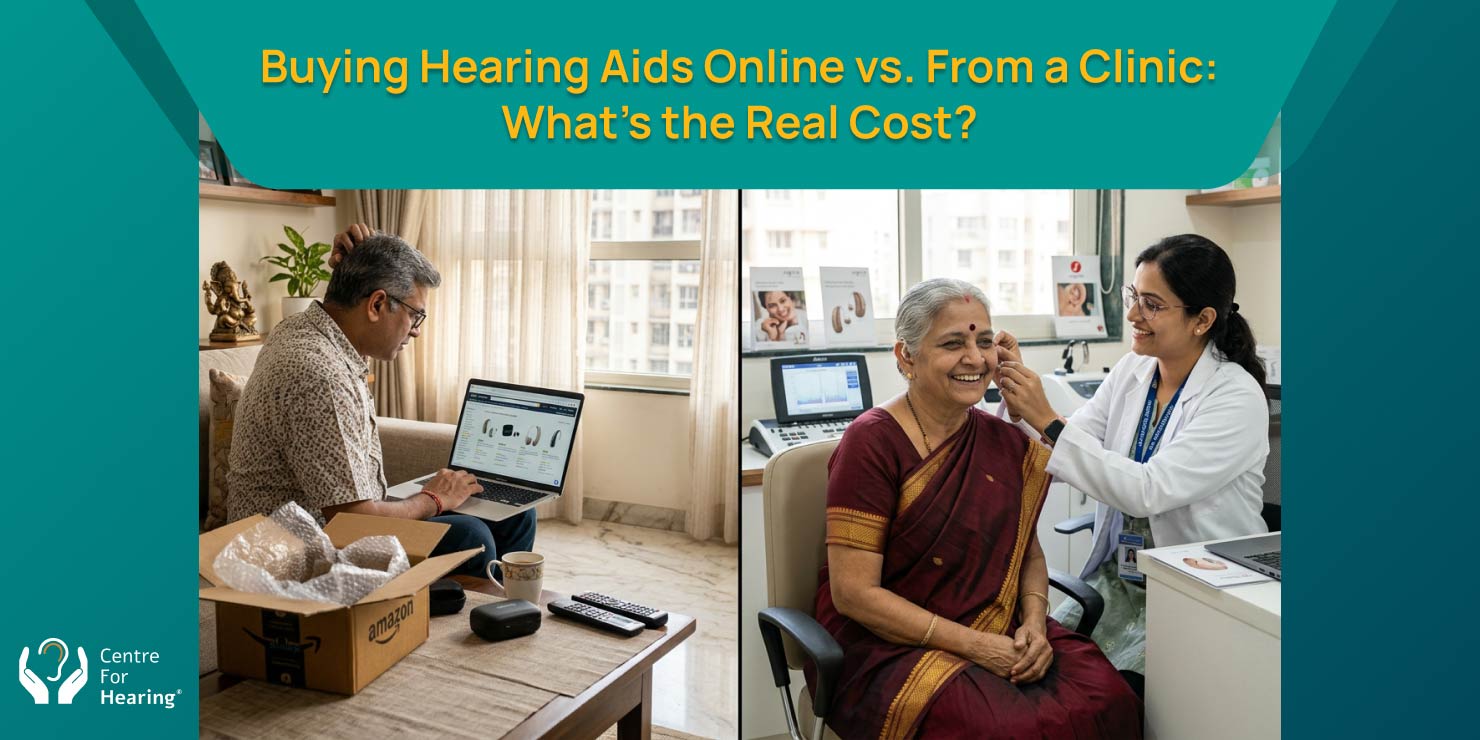
You find a hearing aid online. The specs look right, the reviews are decent, and it costs less than what the clinic quoted. So you order it. The device arrives, you put it in, and it doesn’t quite work the way you expected. The sound is either too loud in some frequencies, too flat in others, or just… off.
This happens more often than most people realise.
Buying hearing aids online isn’t inherently wrong. But hearing aids are not like reading glasses, which you can pick up at a pharmacy. They’re calibrated medical devices; in other words, you require a professional audiologist who understands sound and your hearing to help personalise them for you. And without a proper hearing evaluation and fitting behind them, even a ₹50,000 device will most probably underperform badly.
Officially, any respected hearing aid company disallows the sale of their hearing aids online and without a professional audiologist to dispense their audiological services.
Infact most hearing aid brands consider the warranty on their devices to be void if purchased online or through an unrecognised seller.
Why More People Are Buying Hearing Aids Online — And the Problems That Follow
In the past few years, hearing aids have started appearing on major e-commerce platforms, often at prices that undercut clinic offerings significantly. Some of these are Chinese entry-level devices. Others are basic amplifiers dressed up in hearing aid packaging, they make everything louder, including background noise, without addressing your specific hearing profile.
The core problem: no two people’s hearing loss is the same.
A person with age-related hearing loss typically loses clarity in high-frequency sounds first. Someone with noise-induced loss may have a notch at a specific frequency. Someone with middle ear involvement needs an entirely different device category. Buying hearing aids without a diagnostic audiometry test is a bit like getting prescribed glasses without an eye test — the lens power might be close, but it’s unlikely to be right.
What a Product Listing Won’t Tell You
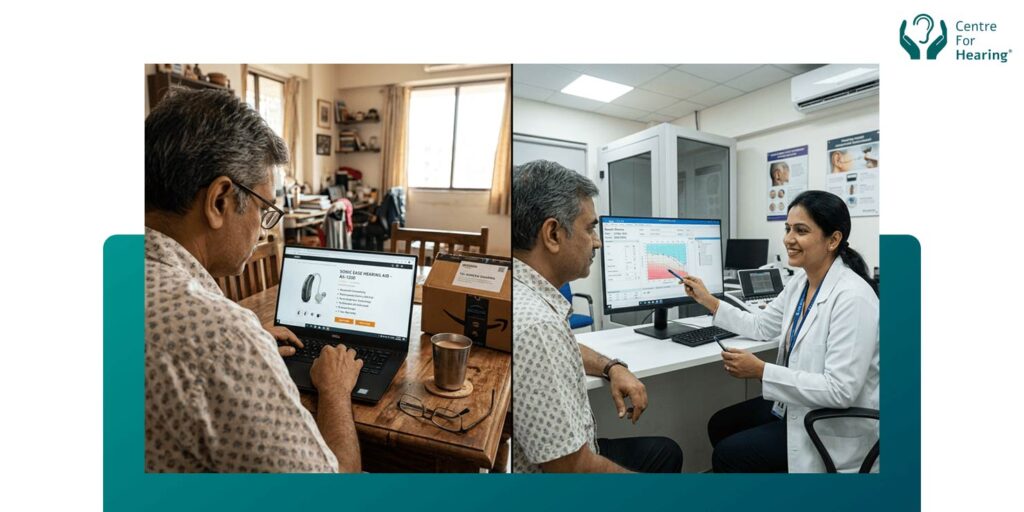
When you’re buying hearing aids online, the listing will tell you the features: Bluetooth connectivity, rechargeable battery, noise reduction, number of channels. What it won’t tell you is whether any of that is configured correctly for your ear. Buying hearing aids is a clinical process, not a shopping one — and a spec sheet is not a substitute for an audiogram.
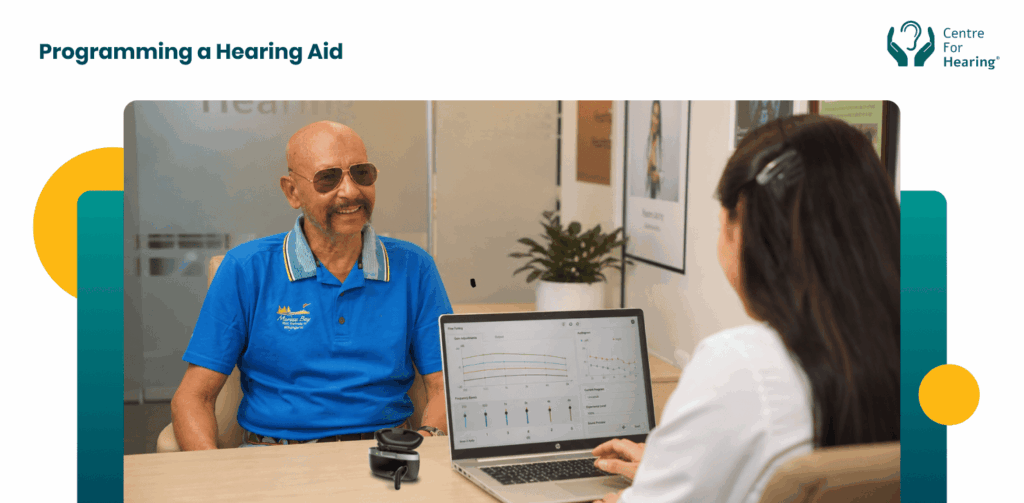
Hearing aids require programming. The audiologist sets gain levels across different frequency bands based on your audiogram. They adjust for your ear canal’s size and shape. They account for the type of hearing loss, how long you’ve had it, and what listening environments matter most to you, a quiet home is a very different acoustic challenge from a noisy family dinner or a busy market.
None of that happens when a device ships to your door.
There’s also the matter of Real Ear Measurement (REM), a verification process that checks how the hearing aid actually performs inside your specific ear canal, not just in theory. This step is skipped entirely with online purchases and is honestly skipped at quite a few clinics too. It’s one of the cleaner indicators of whether you’re going to get accurate amplification or just a rough approximation.

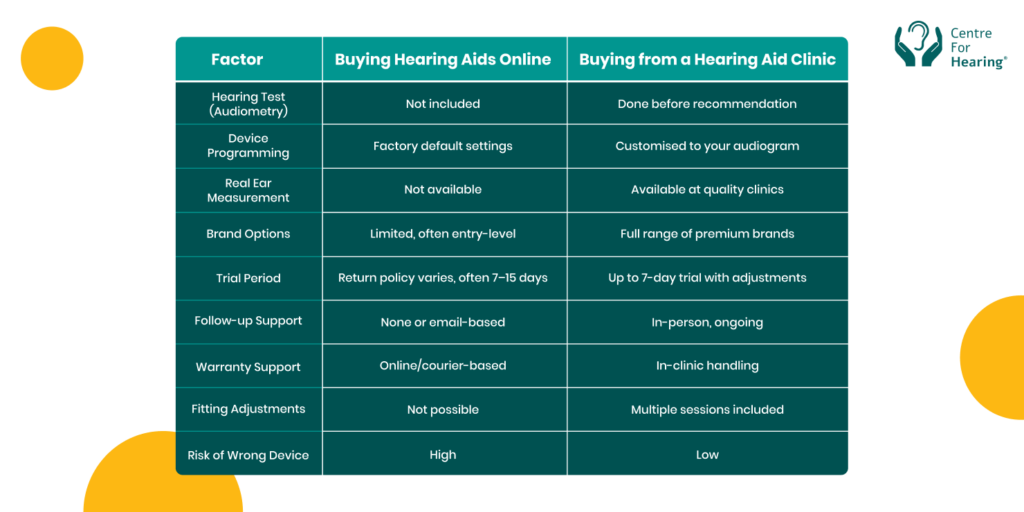
Side-by-Side: Online vs. Clinic Purchase
If you’re still weighing the two options, here’s what buying hearing aids online versus going to a clinic actually looks like across the factors that matter.
The Hidden Costs of Buying Hearing Aids Online
The upfront price is lower. But here’s where things tend to unravel.
If the device doesn’t fit your hearing profile, you’ll either return it (if the return window is still open) or continue wearing something that isn’t helping. In the latter case, your hearing loss goes unaddressed for longer, which matters because untreated hearing loss has documented links to cognitive decline, social withdrawal, and reduced quality of life over time.
If you return it and buy a second device, you’ve now spent more than a clinic visit would have cost. And you’re still without a proper diagnosis.
Then there’s the question of follow-up. Hearing aids need adjustments over time. Your perception of sound changes as your brain acclimatises to amplification. Audiologists call this the acclimatisation period — typically the first few months. During that time, the device usually needs at least two or three fine-tuning sessions. With an online purchase, you’re managing this on your own, often with a manufacturer’s helpline that has no access to your audiogram.
There’s also battery replacement, dome or receiver replacements, wax guard changes, and periodic recalibration. Over three to five years, the cost of getting these done ad-hoc often exceeds what you’d have paid for a proper clinic package upfront.
What You Get at a Hearing Aid Clinic
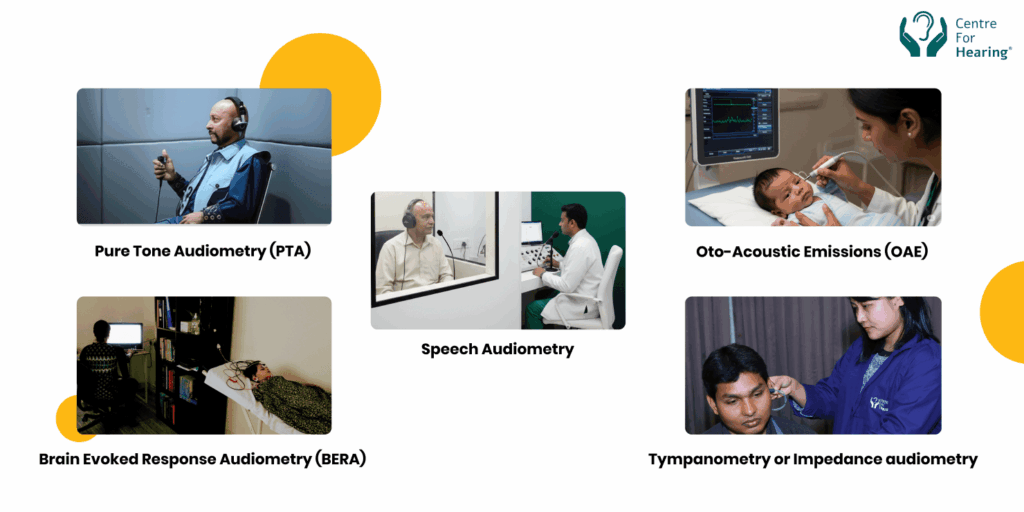
At a properly equipped hearing aid clinic, the process starts before you ever see a device. That’s the fundamental difference from buying hearing aids online — the work begins with understanding your hearing, not with choosing a product.
First comes a Pure Tone Audiometry (PTA) test — the standard hearing evaluation that maps your hearing across different frequencies. Depending on the results, the audiologist may also perform Tympanometry (to check the middle ear) or OAE testing. The results shape everything: the type of hearing aid recommended, the technology level needed, and how the device gets programmed.
Then comes the trial. You wear the device in real life — at home, at the market, during a conversation with family — and come back with feedback. The audiologist adjusts accordingly. This is the part that actually makes a hearing aid work for you.
Premium international brands like Phonak, Signia, Widex, ReSound, and Oticon have sophisticated fitting software that audiologists use to fine-tune the device to your audiogram with precision. Buying hearing aids from these brands without that software and expertise behind them means a significant part of what you’ve paid for never gets activated. The device’s potential is only unlocked through proper programming.
Want to experience what a proper hearing aid fitting looks like?
Book a FREE Consultation at Centre for Hearing® and get a thorough hearing evaluation done first.
📞 +91 9811 227 269

A Note for Those Researching for Adults
If you’re reading this for an elderly parent or loved ones, there’s one more thing worth knowing: older adults often struggle with self-adjusting any device. Buying hearing aids for a parent is one thing; making sure those devices actually get used correctly over the long term is another challenge entirely. The setup, the charging, the troubleshooting — it’s a lot. Having a clinic where someone can walk in, sit down, and get help without navigating a customer service email thread is genuinely important. And for those with limited mobility, Centre for Hearing® offers a Home Visit Facility, where the audiologist comes to the patient rather than the other way around.. A home visit option, where the audiologist comes to the patient, makes this even more practical for those with limited mobility.
The Bottom Line
Buying hearing aids online saves money at the point of purchase. That’s real. But the cost of wearing a device that isn’t right for you — in discomfort, in missed sounds, in ongoing adjustments you can’t get, and sometimes in buying a second device — tends to exceed that initial saving.
A hearing aid is only as good as the fitting behind it. The device is half the equation. The audiologist is the other half.
Get a Free Hearing Consultation at Centre for Hearing®
Centre for Hearing® has been helping people across North India hear better since 1973. With over 3,00,000 satisfied customers, RCI-certified audiologists, European-standard diagnostic equipment, and a range of premium hearing aid brands, the focus is always on finding the right fit for you, not the most expensive option.
Centres in Delhi, Gurugram, Chandigarh, and Punjab (Ludhiana, Patiala, Jalandhar).
Book a FREE Consultation or call us at📞 +91 9811 227 269
